
Since 2004 Ticket to Ride has been introducing people to this wonderful hobby. Would you be surprised if we said it won the prestigious Spiel des Jahres (We’re gonna use SdJ for this from this point) that year? No? Us neither. (For those of you new to the blog, this is the board-gaming world equivalent of an Oscar.)
So what is so great about Ticket to Ride? Why has it lasted so long as a bastion of introductory awesomeness? Everyone has their own thoughts on this, ours? It’s clearly the melding of a set of simple to understand mechanisms flawlessly put together with quick turns.
The mechanisms? Set collection, route building, hidden goals.

The reason the turns are quick? You take one action and you’re done, in the base game these are, claim a route (get points), take cards (work towards claiming routes), get new destination cards (rarely used but extra hidden goals). It’s that easy really. Smooth, concise and easy to understand. There is clearly more to this but we think that’s the basics. Doesn’t hurt that it’s made so well too and everywhere!
In the twenty years it has been in print there have been various iterations… so lets have a quick look at some of those…
Base Games…
The year after TtR (as we will refer to it from now on…) TtR:Europe hit the shelves with new mechanics added. This was the first of the alternative base games, since then others include Marklin, Germany, Rails and Sails, Nordic Countries… These all take the base game and put a twist on it in various ways as well as having unique maps that add their own challenges.
Map collections…
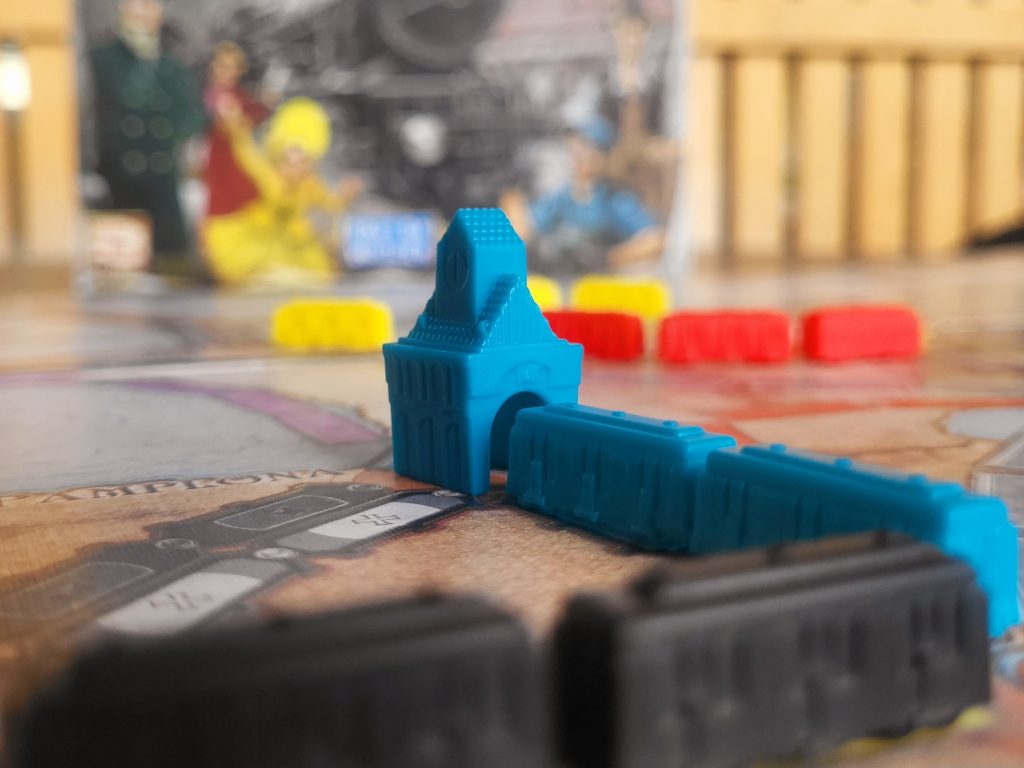
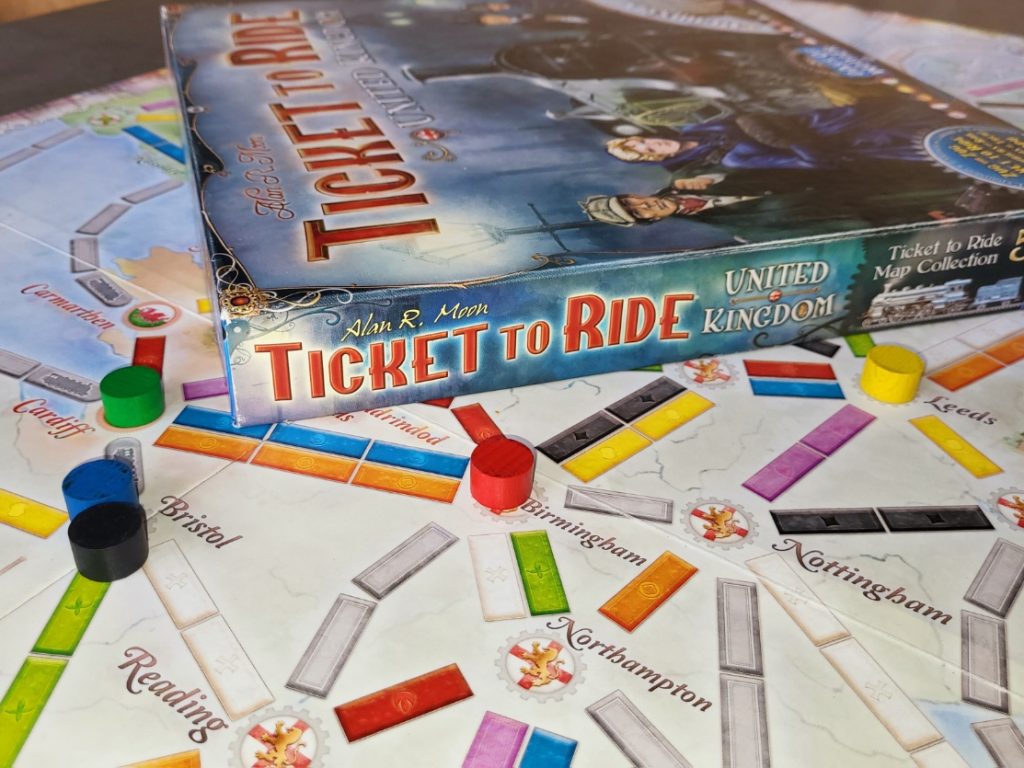
These Started in 2011 and there have been several since then. These add new boards but need a base game to play (normally TtR or TtR:Europe), again, new challenges as well as new maps. The UK one is great as it adds technology and the bullet trains of Japan are also excellent.
Cities…
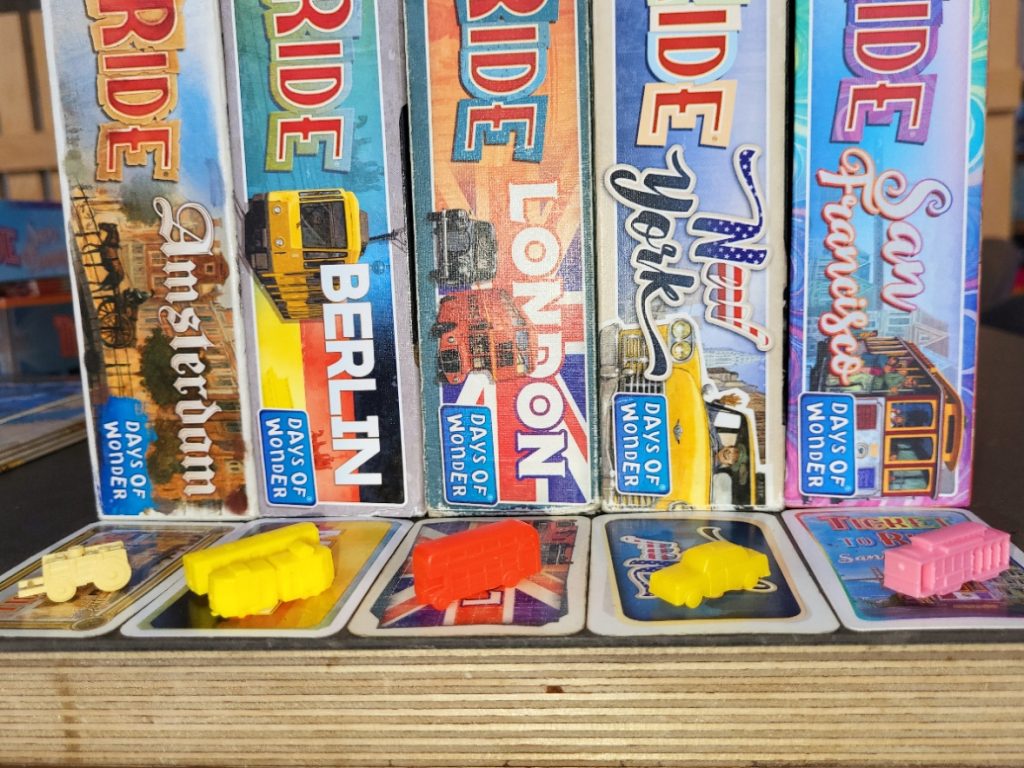
These are great games for our cafes as they are smaller games (2-4 players) and have less than half the pieces of a normal game and thus last about 20 to 30 minutes.
As in the base games they all have unique maps and special rules but be warned, they can feel less forgiving as you are so limited on pieces that an inefficient turn hurts your score more.
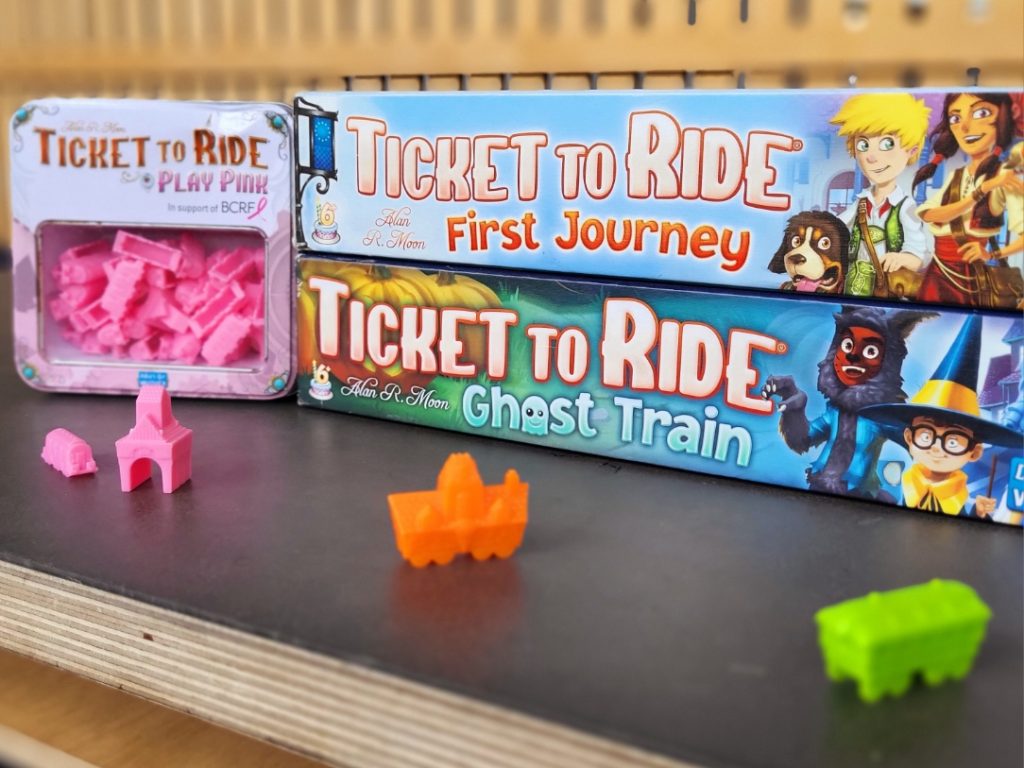
I do love the little wagons of Old Amsterdam and the buses of London as each city game has its own playing pieces to make them even cuter!
Miscellaneous…
Various mini-expansions have been released and other odd spin offs, from the Play Pink extra colour set for charity to a whole new way of playing that changes between games in a Legacy format. The kid friendly versions simplify rules further (First Journeys and Ghost Train) whilst Alvin and Dexter introduces monsters and aliens into the game…
So, twenty years on, is it time to try something new, and if so… what?
How about… NOT something ‘new’…
Hear me out, back in 1974 a game called Legemax was released, in this un-themed game you would connect targets on cards, yeah, route building. This game did not even credit its designer who would eventually go on to win a record breaking 5 SdJ (1986, 87, 96, 99, and 2000) and another game of his would turn out to be the first ever published game to use a score track that goes around the outside of the board (just like in TtR) which in German is called a Kramerleiste which translates as Kramer-Border.
Wolfgang Kramer is his name and he iterated his original idea from an un-themed game to a game about 2 kids on bicycles riding around town (Bike About, 1982) onto a game about travelling the world to save endangered animals (Wildlife Adventure, 1985) finally into a game about visiting the major archaeological sites of the world… (Expeditions: Around the World, 1996). This is the one we are talking about here!
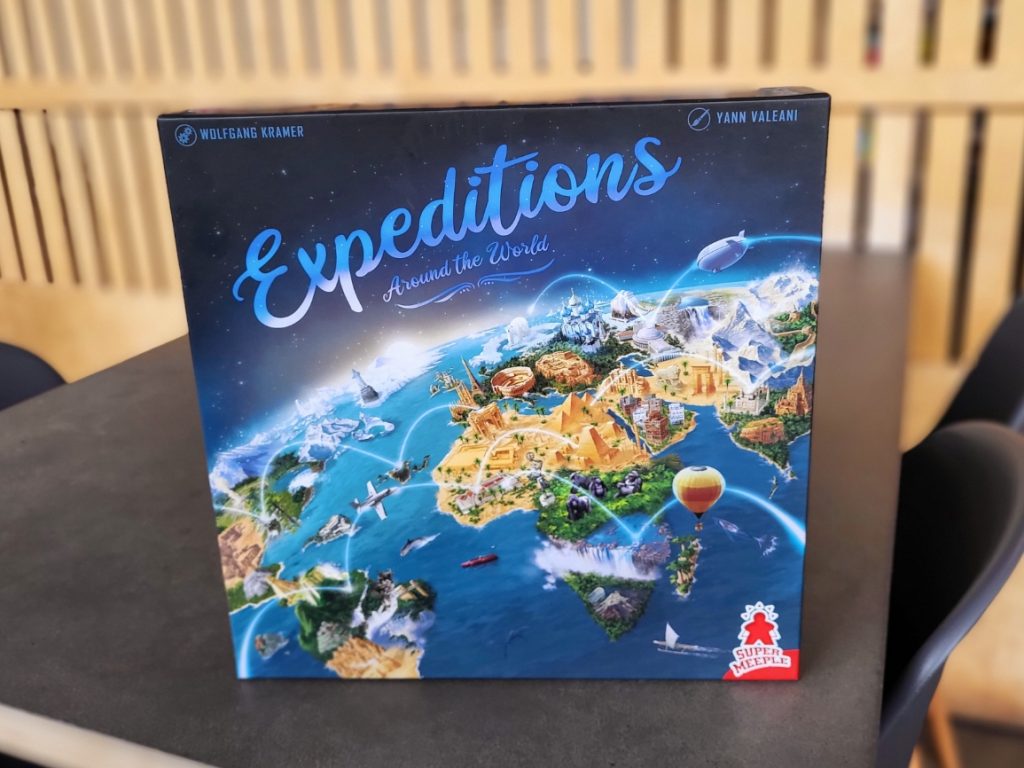
Expeditions: Around the World has recently been given a new lease of life by Super Meeple who have had it picked up by distributors Hachette Games which means it’s everywhere and we think you need to play it, even though it never won the SdJ it did get a recommendation from the judges in 1997 (alongside the great game Bohnanza).
Does this stand the test of time?
In one word, yes. In multiple words, do you think we would write a blog on it if it wasn’t good?
So, what mechanisms does E:AtW use? Err… route building and umm…. hidden goals…
Yeah, that’s two of the three that TtR uses. Don’t forget E:AtW is actually the older game so, what’s different?
Everything.
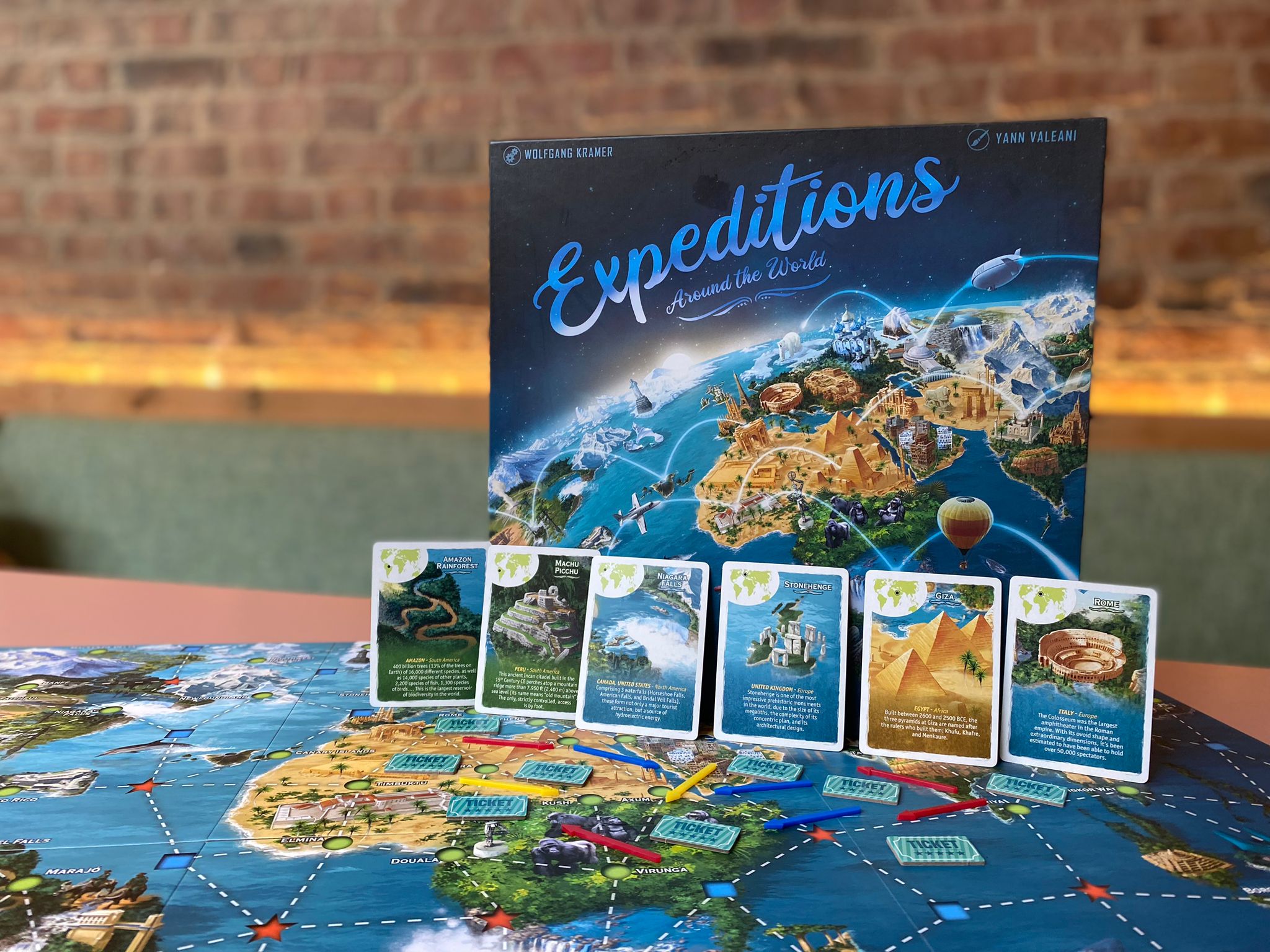
On your turn you will extend an expedition or route. Simple, well not really, as in this game you share the route building with everyone else so we are talking communal routes. The aim is to get any of the three expeditions to visit your cards and come out on top with points. There are 80 cards representing the 80 places of interest on the map. If anyone sends an expedition to your card as long as you claim straight away then it’s completed. Don’t notice? Tough, you’ll have to get back to it with another expedition.
Wait, there’s more. At the start of the game you reveal some of your destination cards and mark the map accordingly so everyone knows part of your plan. So people can mess with you. There are also a number of revealed communal destination cards that anyone can complete on their turn.
Enough?
Nope?
Well, there are two other location types or ‘hubs’ if you will… these either allow you to extend an expedition again, any of them, or give you a ticket. Did we mention tickets?
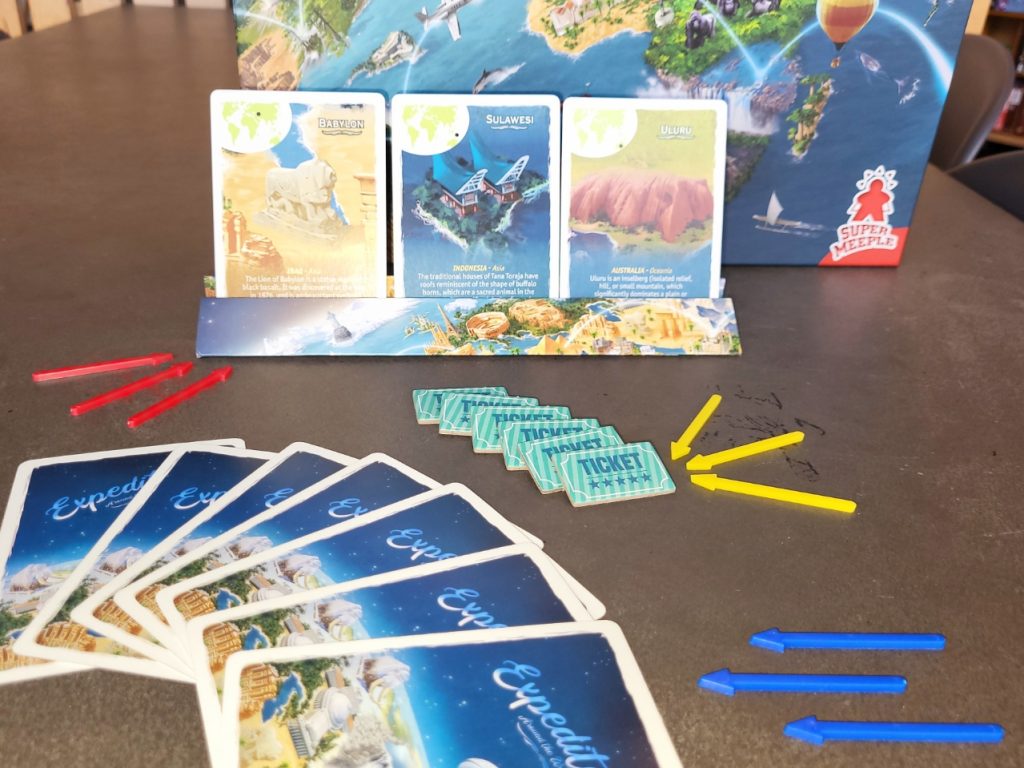
Well, tickets let you break the rules a bit. You can use up to two a turn and they can be used to either extend any expedition, remove an arrow (and thus send an expedition back one space, activating it again) or let you swap out some of your goal cards.
With a clever use of tickets and hubs you can truly make some excellent moves. Did we mention all expeditions must keep heading from their last point? Unless you make a loop, in which case you may… yeah you guessed it, extend an expedition. Not the usual way though… you must extend the looped route but can go back to any location on that expedition and can branch off from it as your free move. This is so powerful that you can only do this once per turn, still you can make some crazy combos!
All these rules are on a handy player aid card. Did we mention it’s a 6 player game too? Take that 2-5 player TtR.
Also as you can see in the photos above, it’s a work of art. The cards even have facts about the locations on them so every day is a school day!
So, tempted? The amount of messing with people and how much the game state can change in a higher player count game is great, that feeling of screwing someone over never gets old, or the feeling when you see a way to get a great turn and are waiting for your turn, hoping nobody else messes it up, just great anticipation.
Expeditions: Around the World is a gateway game that deserves to be on your shelf. Come play at ours, you’ll love it.