
We focused on how you choose who goes first in a game on last week’s blog and looked at a few examples… This time we’re going to look at what some people consider the whole reason behind playing games.
Winning.
Most games (not all!) there will be winners and/or losers or as we like to say here at Chance and Counters those that win and those that don’t do as well.
We reckon there are three main types of ways to win in a game so let’s crack on and talk about each one…
First Place
Plenty of games have a goal and the first there wins. What the goal is can vary hugely, let’s split this down further and look at some of the most popular.
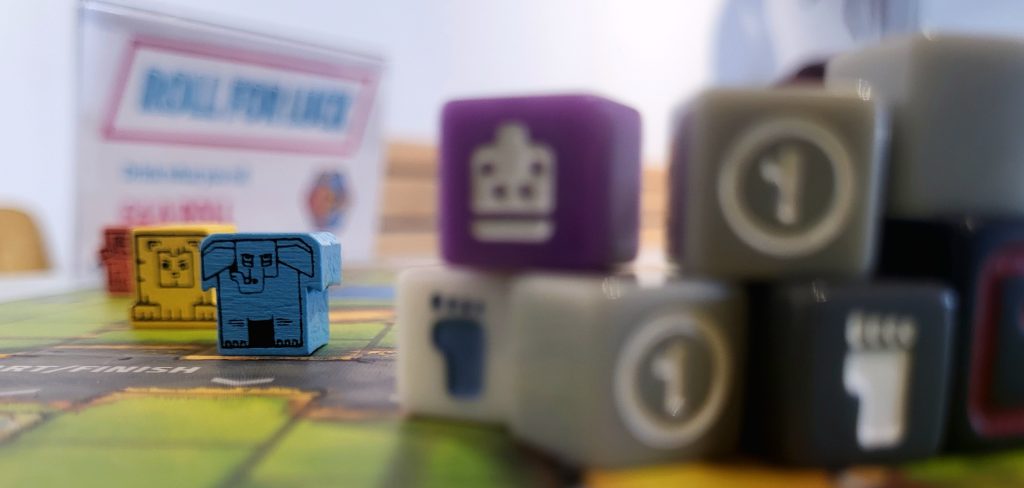
The most obvious is ‘first past the post’, Cubitos is an obvious game to mention here. In Cubitos you are drafting dice and basically using those dice to buy more dice and go around a race track. In the round that one or more players cross the finish line then the game is potentially over. If only one player has crossed the line then we have a winner but if more than one have crossed that line then you check how far across the line each player got, if one is ahead then they win. If multiple players are the same distance across the line then you play another round until you have a winner. There is only one space on the podium after all.
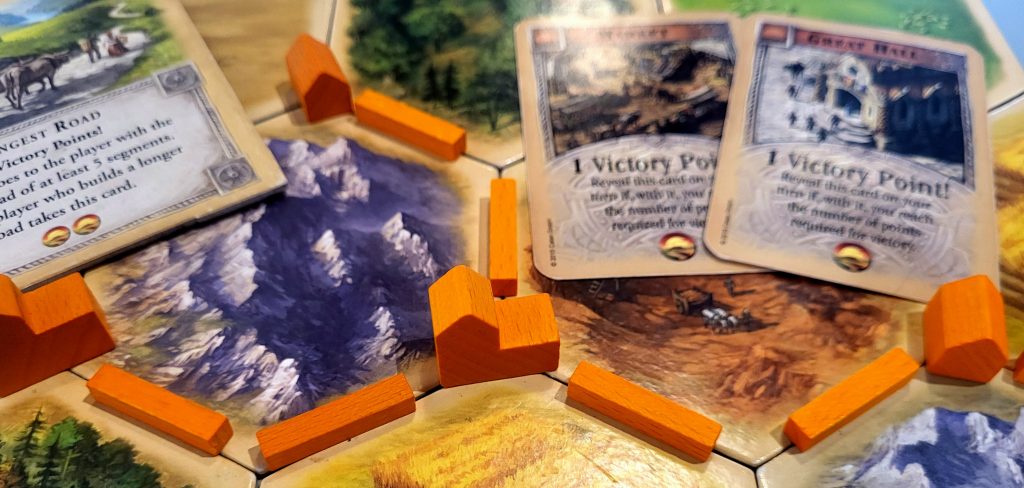
Another slightly different example of this is Catan. Here, the first player to get 10 points is the winner. That’s it. Nobody gains points at the same time so there is not going to be a tie-breaker, it’s simple and clean and apart from the fact that some points are hidden it is very easy to figure out who is closest to winning at any given point. This is always a good reason not to trade with that person!

The third we’re going to mention here is conditional. What we mean here is that there is a specific win condition that if you reach it first you’ve won. Santorini is a great one for this, it’s a beautifully simple game as all you do on your turn is move a piece and then build next to it. If you can move on to the third level of a building then you are done. Bragging rights ahoy.
The fun part of the game is that you can build a roof on a third level if you are close enough and block another player from winning. There is a huge curve-ball added to the game when you play with the asymmetric cards and that does bring in other ways to win, for instance if you can’t take your turn then you get knocked out of the game, this is me doing a perfect segue as the next thing we are going to mention is…
Survival
Got no pieces? You’re out of the game (this can happen in Santorini!). Nobody else left? Well, looks like you win!
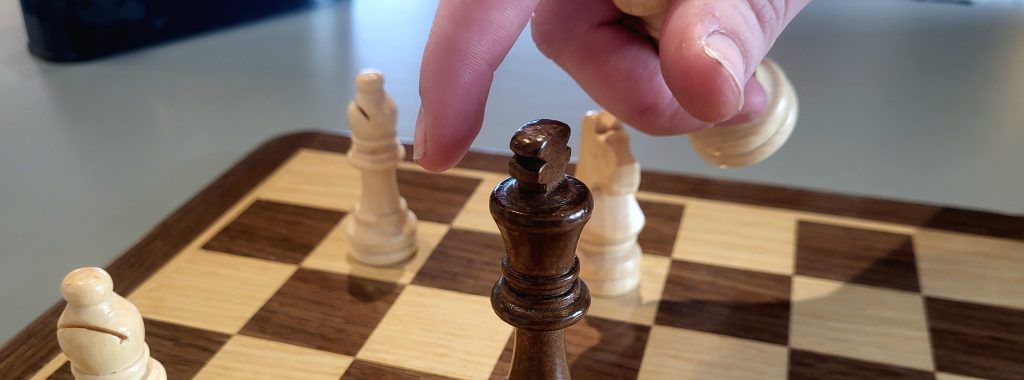
Chess is a clear example of this, capture the King and it’s game over, man. They lost the piece they were protecting so haven’t done so well. Oh dear.
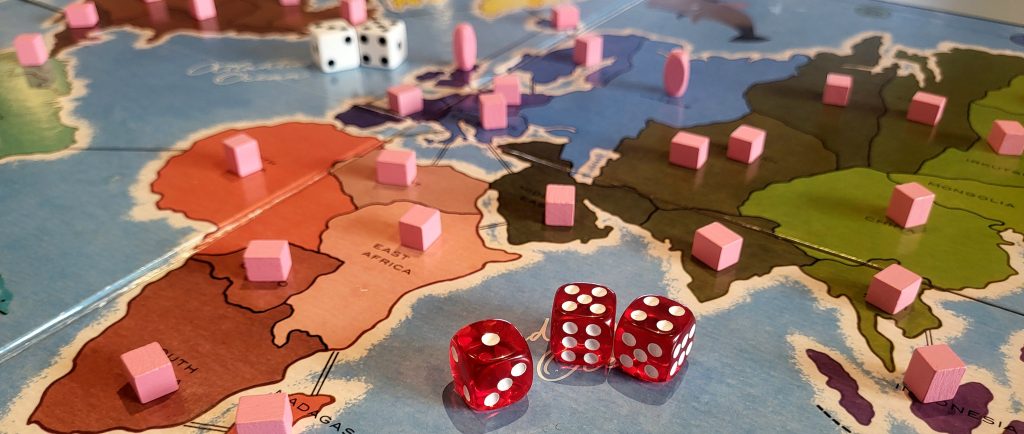
Risk is another classic of this type. Destroy everybody else’s armies and you’ve got global domination. Here lies a potential issue with games like this, if you’re not in a good position you’ll have to play along without any chance of winning. You may even be removed from the game and there may still be quite a while left to play so you’re left waiting around, not fun.
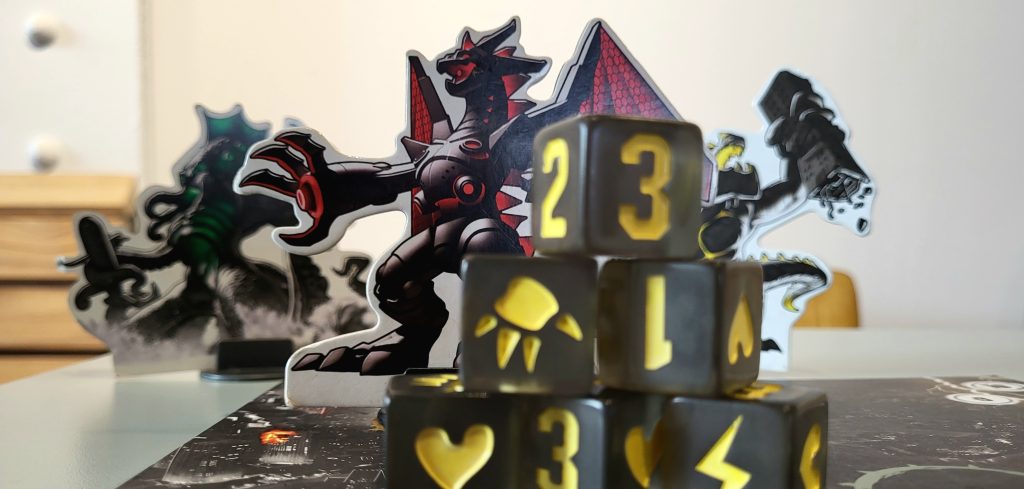
Luckily games have come a long way since then so let’s mention King of Tokyo. This is basically a King of the Hill style game in that the last one standing is the winner. You chuck dice and giant monsters duke it out hoping to rule Tokyo. There is an alternative win condition and that’s a First Place condition, get to 20 fame and you’re now such an iconic Monster the others just give up! Not quite how fame works in the real world, but close enough!
That leaves one more to go and it’s all about…
Hi Score!
Points, money, gems, area, get the most stuff and you win once the game ends. That’s what we’re talking about here.
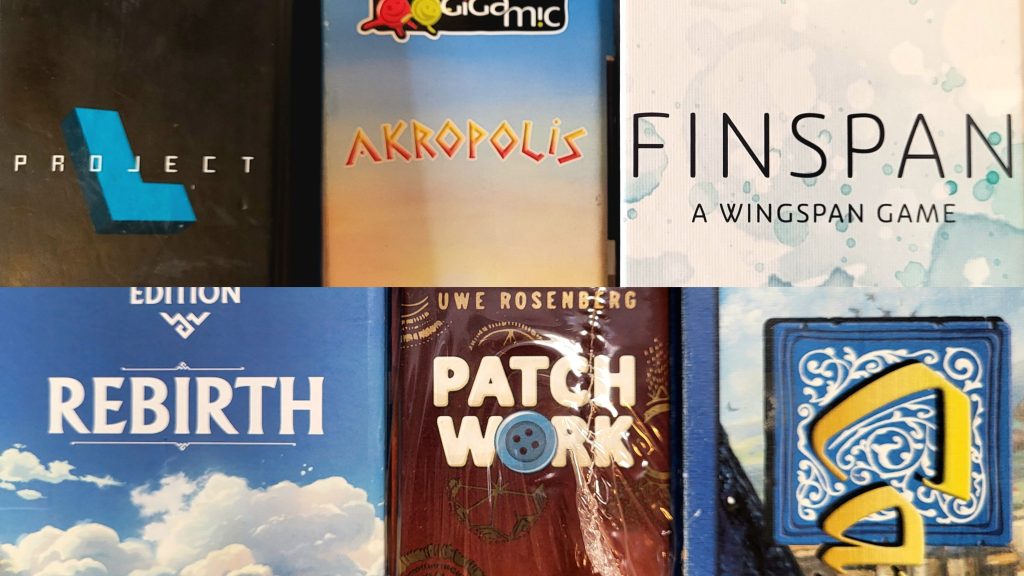
Modern games love to take this approach. Project L, Akropolis, Wing/Wyrm/Fin-span, Rebirth, Patchwork, Carcassonne and countless more are all about getting a score greater than your opponents. You do need a thing that ends the game too whether it be depletion (running out of tiles in Carcassonne), a time limit (A set number of rounds as in one of the ‘spaniverse’ games) or some other condition.
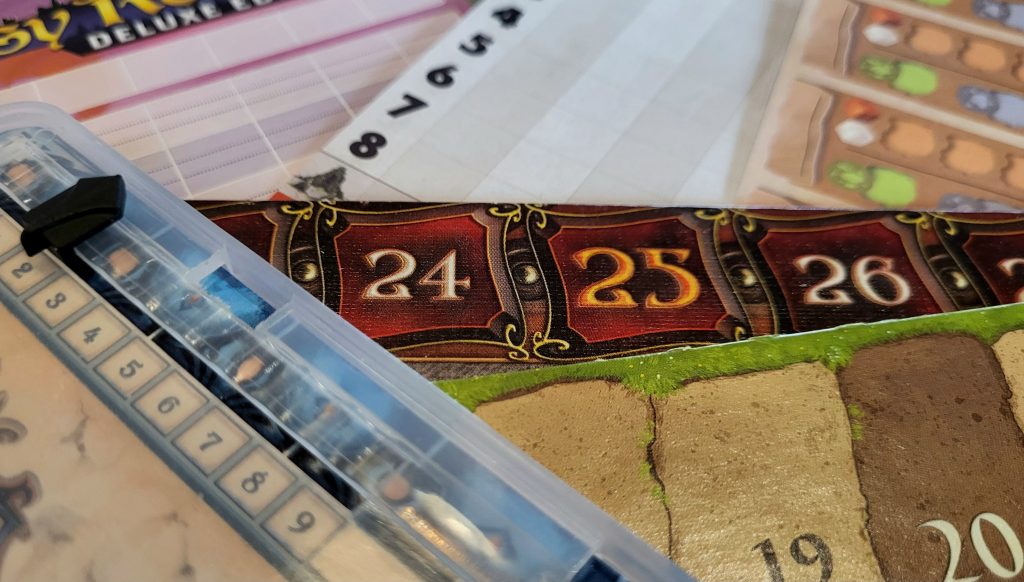
Sometimes you know how everyone is doing during the game as there is a score track, other times you total up the score at the end on a score pad, online or even in your head (good luck!). Sometimes it’s a mixture of both (we’re looking at you, Ticket to Ride).
This system has it’s own issues as there is always the ‘we’ve got the same score’ moment and games come up with creative (and not so creative) ways to break this tie-breaker, so much so that I think next week we’ll look at some of those.
In the meantime have a think about some of your favourite games, do they fit into one or multiple of these categories? Probably!
One last thing… is winning all there is in a game? Not really, clearly taking part is also important as is enjoying the journey, but maybe it’s those that don’t win that think that… else, why would they keep playing?