
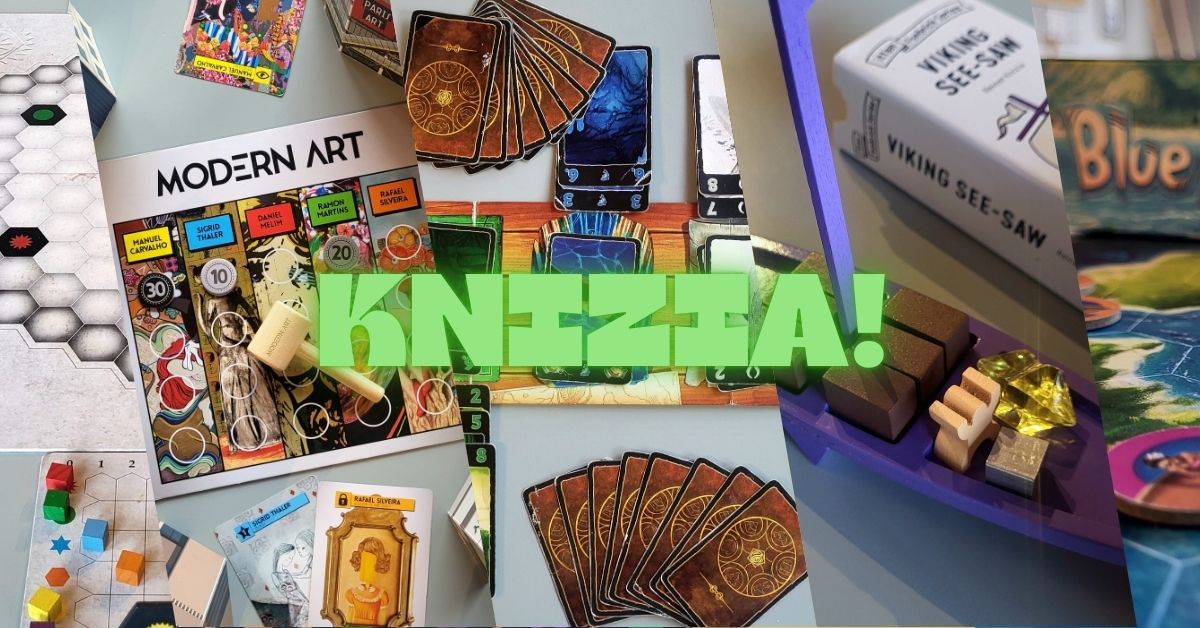
No, we’re not going all Timey-Wimey… we’re actually starting another new series of blogs, with this set focusing on specific board game designers. First up is the most prolific board game designer in the world, Dr. Reiner Knizia.
He was born in Germany in 1957 and studied mathematics to a PhD level (hence the nickname Doctor), which led to a job in the banking industry. What we are interested in is his games though and his first published ones came out in 1990, since then he has nearly 800 board game related links to his name on Board Game Geek.
Leave some room in the hobby for all the other designers Reiner! You have to give him big respect as not only is he prolific, he is also always out in public wearing a bowtie. What a Legend.
With that many games published there has to be at least some on our shelves, and indeed there are, let’s pick five to take a look at.
First up: Auctioning Mastery

The Doctor is known for lots of different styles of game and auctioning mechanics is one of the many things he excels at. One of his earliest titles (1992) is still one of his top ranked titles of all time: Modern Art.
In this game 3 to 5 players are acting as Museum curators and looking to buy and sell paintings of five artists with the aim of having the most money at the end of the game. Each turn a painting (or two!) will be put up for auction by one player and the others will bid, depending on the style of auction on the card. With 5 types of auctions, things change up quickly and are never boring, to make it even more fun the most recent version comes with an Auctioneer’s Hammer. ‘Going once… Going twice… Sold!’
When a round ends, paintings are then sold off depending on how popular the artist was in that round and another round is played until four rounds are complete. In later rounds the previous worth of top artists can affect how much a specific artist’s work is worth so you can really rake the cash in!
Some may say we chose the wrong auctioning game to showcase Knizia’s talents but this games open ended bidding really teach you a great lesson, that art is only worth what someone is willing to pay for it so we feel it deserves a place on our list.
Two other top notch auction games that are worth a mention from Knizia are Ra (1999) and High Society (1995), both outstanding games in their own right.
Second up: 2-Player Adventure
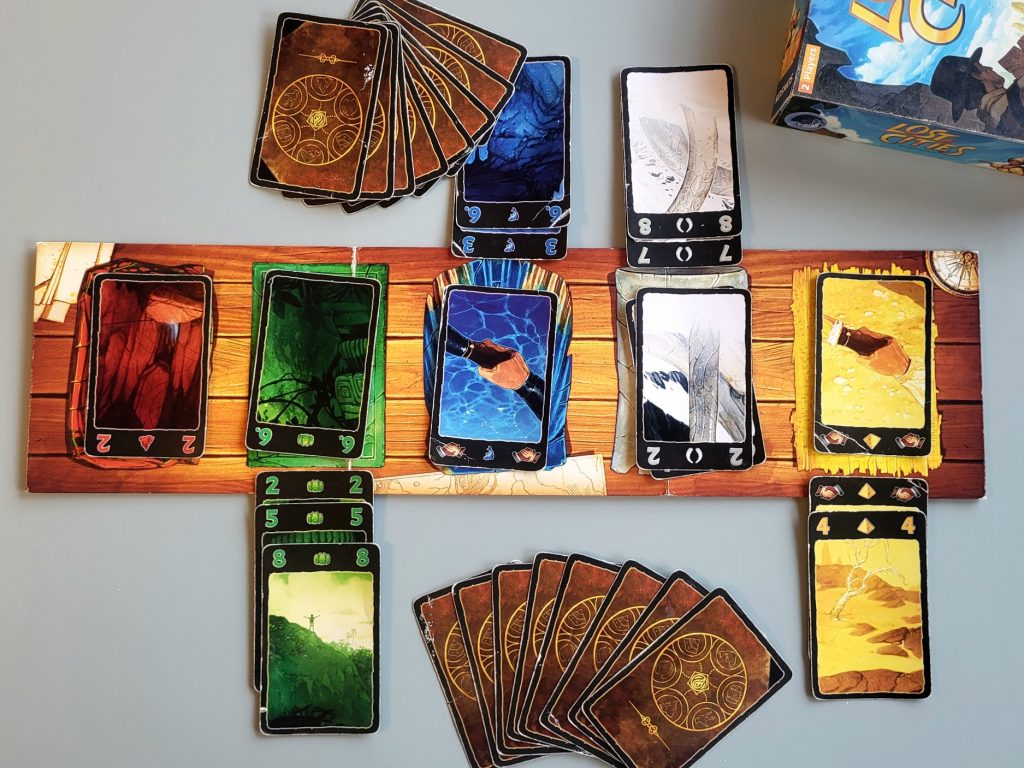
Lost Cities was published in 1999 and has stood the test of time. In it you are rival leaders of expeditions looking to outperform your opponent and become the most renowned by uncovering the best discoveries.
At its heart this is an ordered, set collection, hand management game. Each turn you will play a card from your hand and gain a card to your hand. When the deck of cards runs out scoring takes place and it’s game over after three such rounds.
When you first play a card to an expedition then it’s gonna cost you (running expeditions isn’t cheap!) so, for each one you start you lose 20 points. You’ll play cards to that expedition from low to high and only gain points if you earn more than what you spent to start it. For a twist, before you start an expedition you may play a wager card and this will increase the points value of an expedition, one wager is double points, two is triple points and three is quadruple points. Don’t put enough cards in? Then your negative points will be multiplied too.
As it’s a ‘vs’ game then anything you do to hurt your opponent is as good as boosting your own score so it’s very tempting to hold back cards they can use. Be careful when you discard them though as when someone gains a card at the end of their turn they can take from the top of the discard piles.
In a nutshell, that’s Lost Cities. It may not sound much but it’s another awesome game from The Doctor, one of his biggest awards was a Spiel des Jahres and it happened to be for a game that was based on the mechanisms of Lost Cities, it’s called Keltis (2008) and is well worth your time. An almost ran in the 2-player category would be Schotten Totten (1999) and Blue Moon (2004) is outstanding too!
Third up: Abstract to the Max
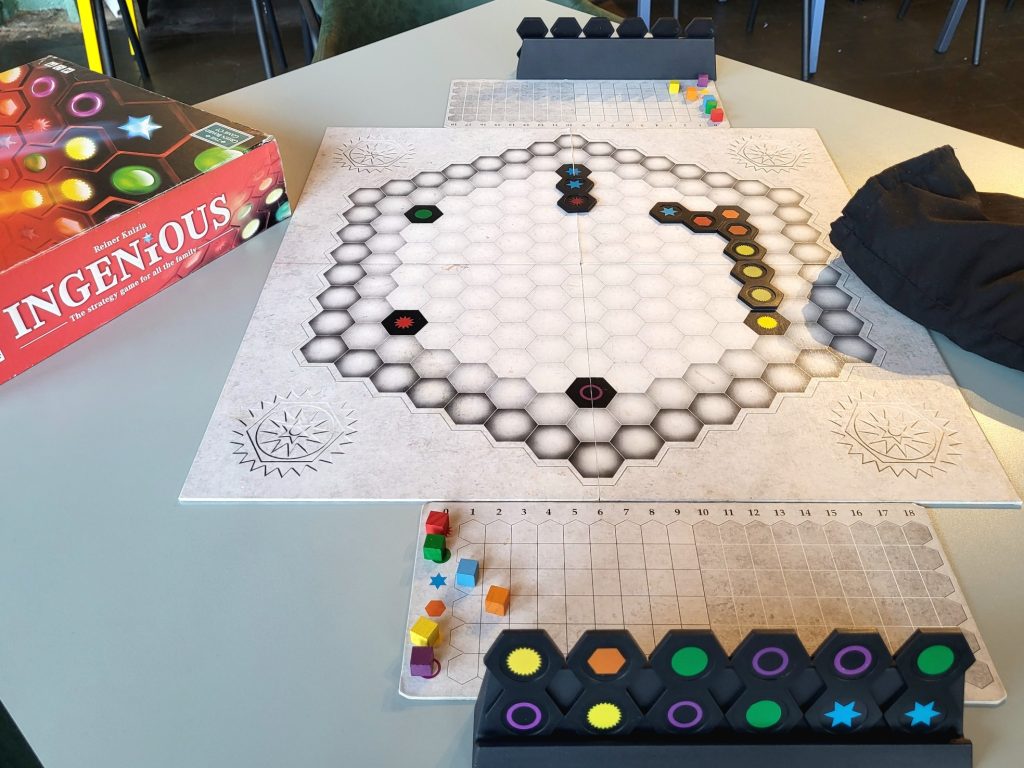
Sometimes the earlier games from Reiner seem to have ‘pasted on’ themes. This means that he made a game and then the theme was added later and sometimes doesn’t quite seem to mesh. So, why even bother with a theme? This is where the 2 to 4 player Ingenious comes in.
This is all about lining up the same coloured tiles and scoring points but the big twist here is a mechanism that Knizia uses in many of their games… It’s a wonderful way to score and it works like this. Each colour has its own scoring track and at the end of the game there is none of this adding up tracks malarkey, your final score is the lowest of all of your score tracks. If your lowest score is higher than everyone else then you win! So it seems like a game where you need to move all the tracks at a similar speed, but wait! There is another rule that states if you max out a track then you get another go, so sometimes it’s worth strategically maximising a track so that you can get a sneaky second turn in a row. Lovely stuff.
Other abstracts that are great from Knizia are FITS (2009) and LLAMA (2019) which are weirdly both acronyms… namely Fill In The Spaces and the not quite so well thought out don’t Let Llamas And Markers Accumulate (something was lost in the translation here…)
Forth Up: Point Salad
The Doctor is great at mixing things up, so there are quite a few of his games that are very much a selection of scoring mechanisms that you need to try and find the best path to outwit your opponents and find the optimum scoring opportunity.
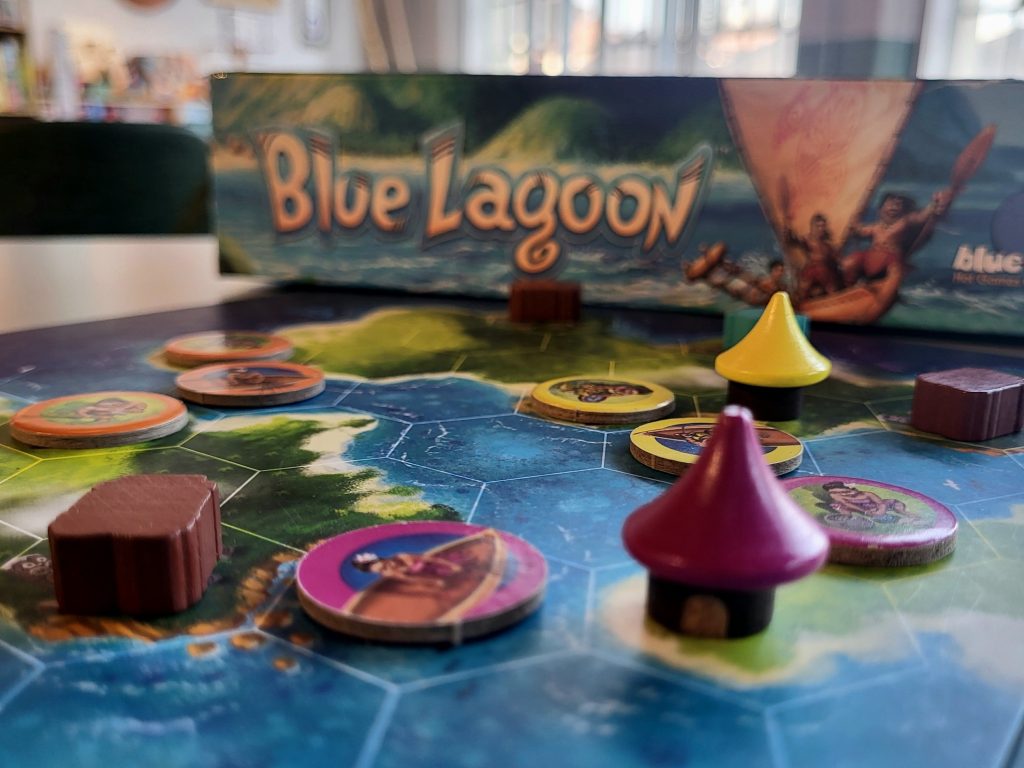
In this 2 to 4 player game, Blue Lagoon, you are settling a series of Polynesian islands by placing out canoes, settlers and villages. Once all of your tokens are out you are then scored over a series of goals, things like ‘number of islands connected by a chain of tokens’ or ‘number of resources of a certain type collected’ or ‘having the majority of tokens on an island’. There are more but you get the idea.
Then all of your non-village tokens are taken off the map and you play again but this time spreading out from your villages and then you score all over again once all your tokens are placed a second time.
So not only a game of multiple paths to victory but also literally a game of two halves.
Other games from Knizia that have multiple paths to victory are Rebirth(2024) and Through the Desert (1998).
Finally: The Other Stuff
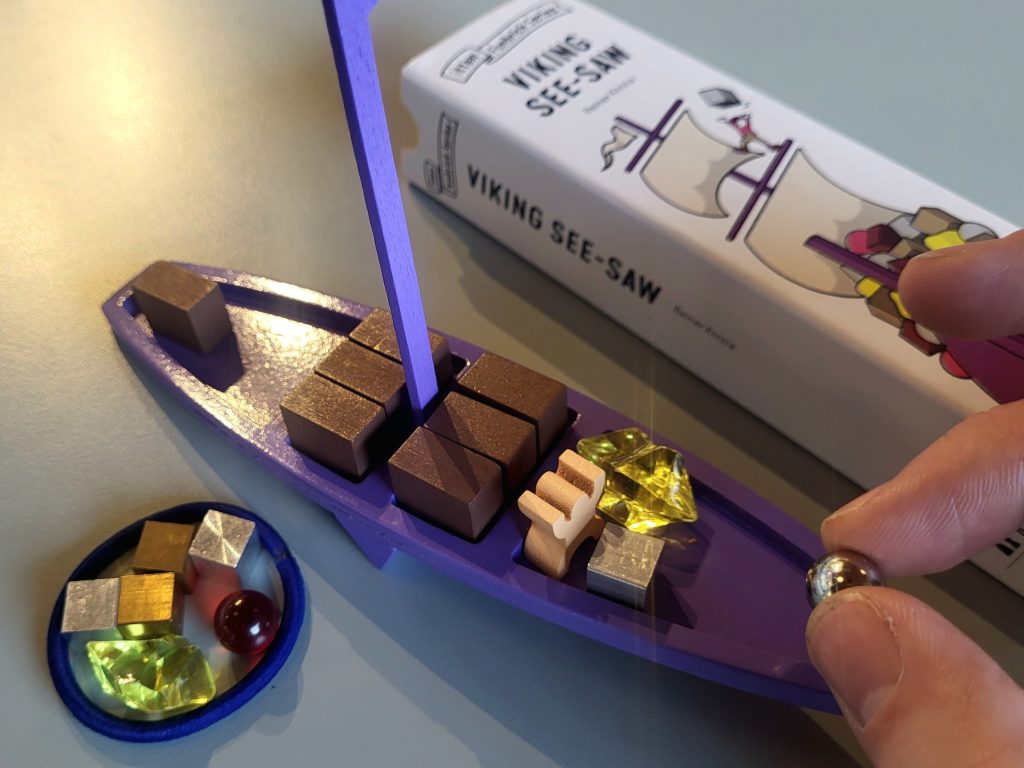
When you have so many games under your belt, some just don’t fit any category, well, they do but I’m on my last recommendation so this is the other stuff… like, Viking See-Saw.
I mean, what is this? A dexterity game? Mad. Balancing stuff on a see-saw shaped like a viking longship? It’s a 2 to 4 player game and one of the few games that involve hairbands. You don’t play with them, you just use them to stop the odd shaped items in your inventory from rolling away. This is fast and daft and very much a quick party game, we love it at our cafes, just like all of Knizia’s games.
Other wonderful games of his that don’t really sit with his other stuff that we have mentioned so far would be My City, his take at a Legacy game and Zoo Vadis, a wonderful game about political machinations between the animals in a zoo to become the star attraction.
___
We had great trouble putting this one together as we have previously mentioned so many Knizia games… Heckmeck and Mlem… to name a couple. Also we could have just gone with classics like Tigris and Euphrates, Lord of the Rings, Medici, Carcassonne: The Castle, Taj Mahal, Samurai, Witchstone, Age of War, or the amazing Quest for El Dorado.
The Doctor is just so prolific we could just keep on talking about his games every blog. We promise not to, although we might have to come back and feature some more of his games in the future.