Creativity & Inclusivity: How a Family is Transforming What Board Games Can Do
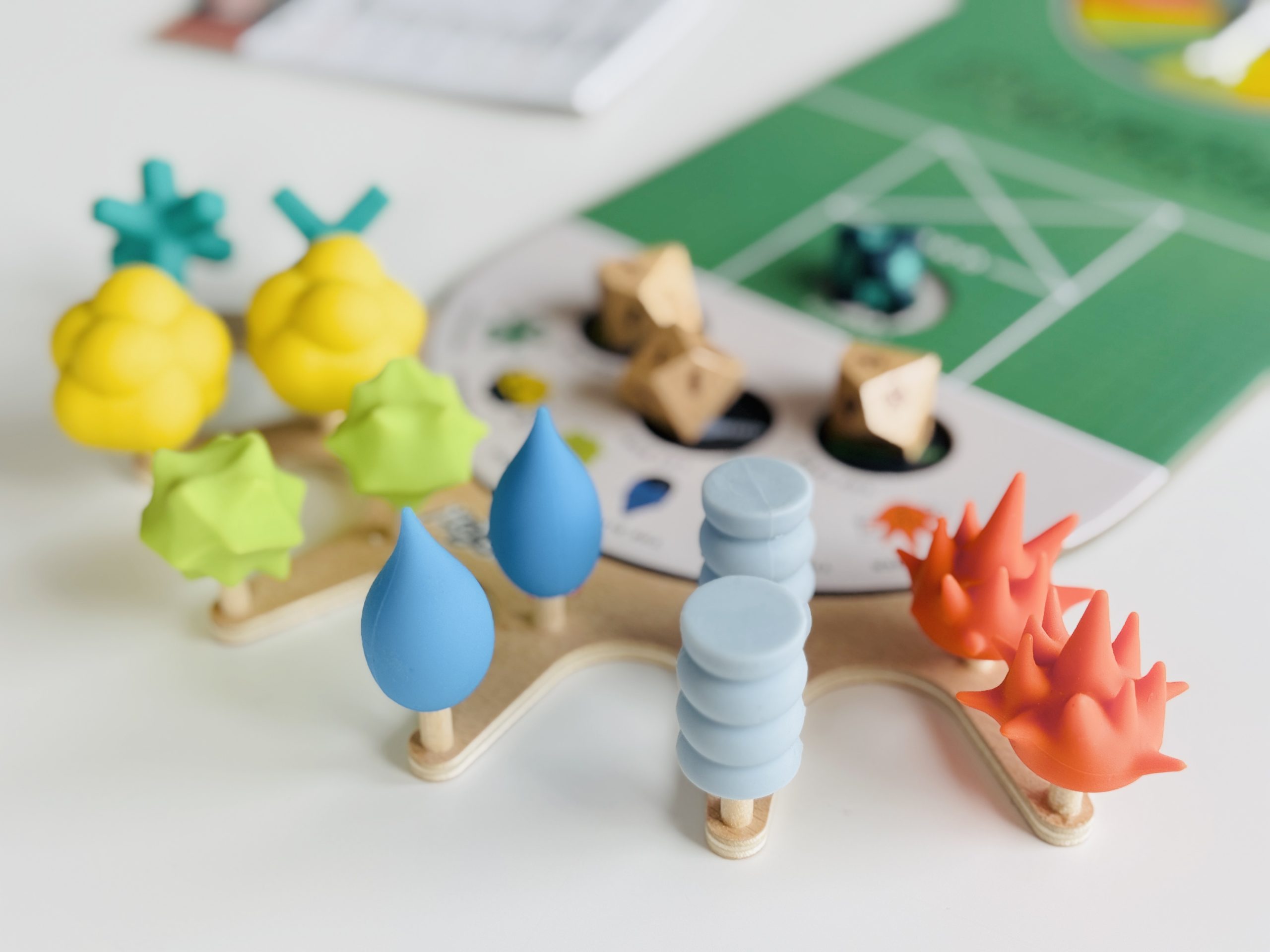
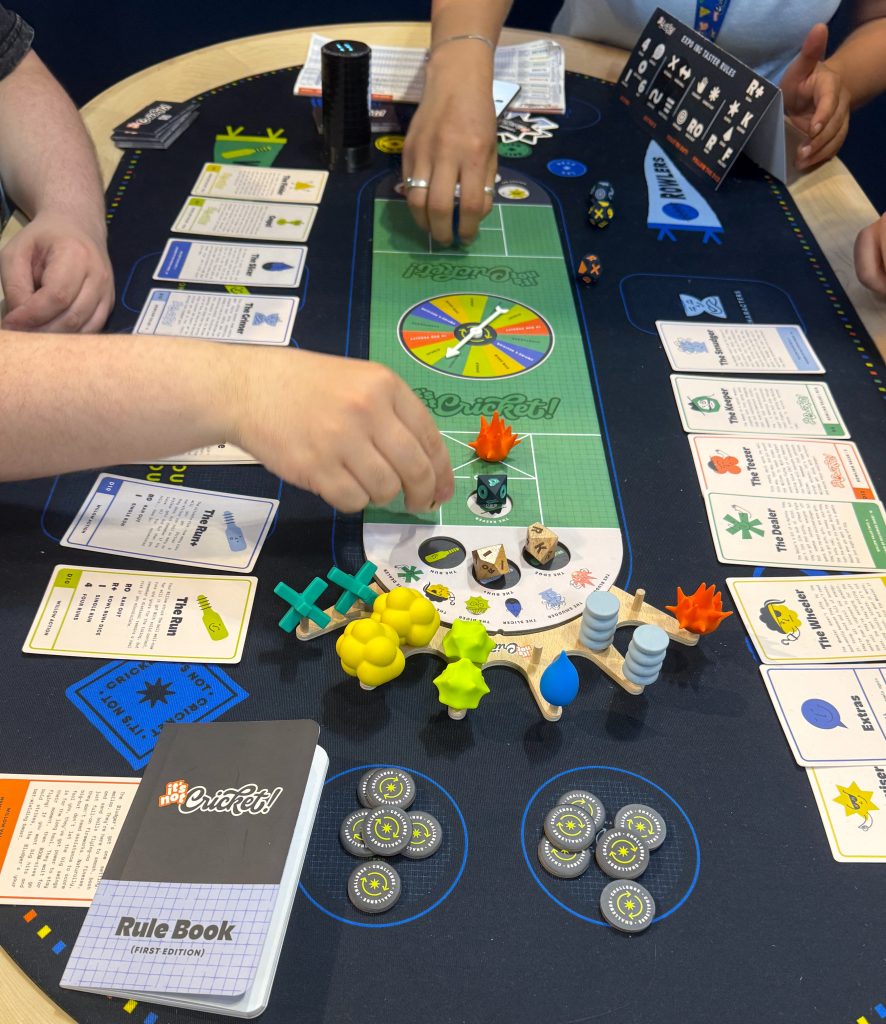
How do you create a game that works for everyone? That’s the question that It’s Not Games, a family-run tabletop game publisher, set out to answer with their debut game, It’s Not Cricket. After years of development, the game is finally here, and it is a true labour of love. Putting a new spin on the classic sport, the game has questioned industry standards and challenged what ‘accessibility’ really means.
But how did they get here?
At Chance & Counters, we are trialling a new event: ‘Meet the Designer’. As the name suggests, attendees will not only have the chance to try brand new games by UK-based game-makers, but will also have the opportunity to pick their brains and learn more about game-making from the inside!
To start this new series, we are delighted to have It’s Not Games over in Leeds, on the 29th of July and the 12th of August.
I was lucky enough to meet up with the founders, Zoe and Paul Jozsa, for a chat ahead of the event. Discussing the project’s origin, they described how they turned their mission statement — to create a neuro-inclusive game that could be enjoyed by all — into a reality. While there have been challenges, it is clear that the experience has been incredibly rewarding.
Zoe and Paul are eager to share It’s Not Cricket with you guys, and hear and learn from your thoughts. So, if you want to be part of this process, have a read and come along to the event!
Summary:
1. What is It’s Not Cricket?
Miriam: Thank you so much for meeting up with me and bringing your game to Chance & Counters. We are really excited to host you later this month! This is a great chance for people to get to know you and It’s Not Cricket ahead of the event.
To start us off, would you like to tell us a little bit about yourselves and your family business?
Zoe: Absolutely! We’re It’s Not Games, I’m Zoe, and this is my dad, Paul. It’s Not Cricket really started with you, Dad.
Paul: Yes, it started with me observing cricket. My son, Zoe’s brother, started playing the sport, and as I watched Saturday after Saturday, I realised there was a lot of unfairness in the way the game was set out. There were all sorts of suggestions of racism, misogyny, ageism, elitism, and I just thought that shouldn’t be the case because, after I had watched it for quite a while, I saw there was quite an interesting game inside of that outer shell.
So, I started trying to find the root of the game. What is this game? Can we put this into a format that everyone can enjoy? I wanted to get rid of the static and white noise and get to its essence.
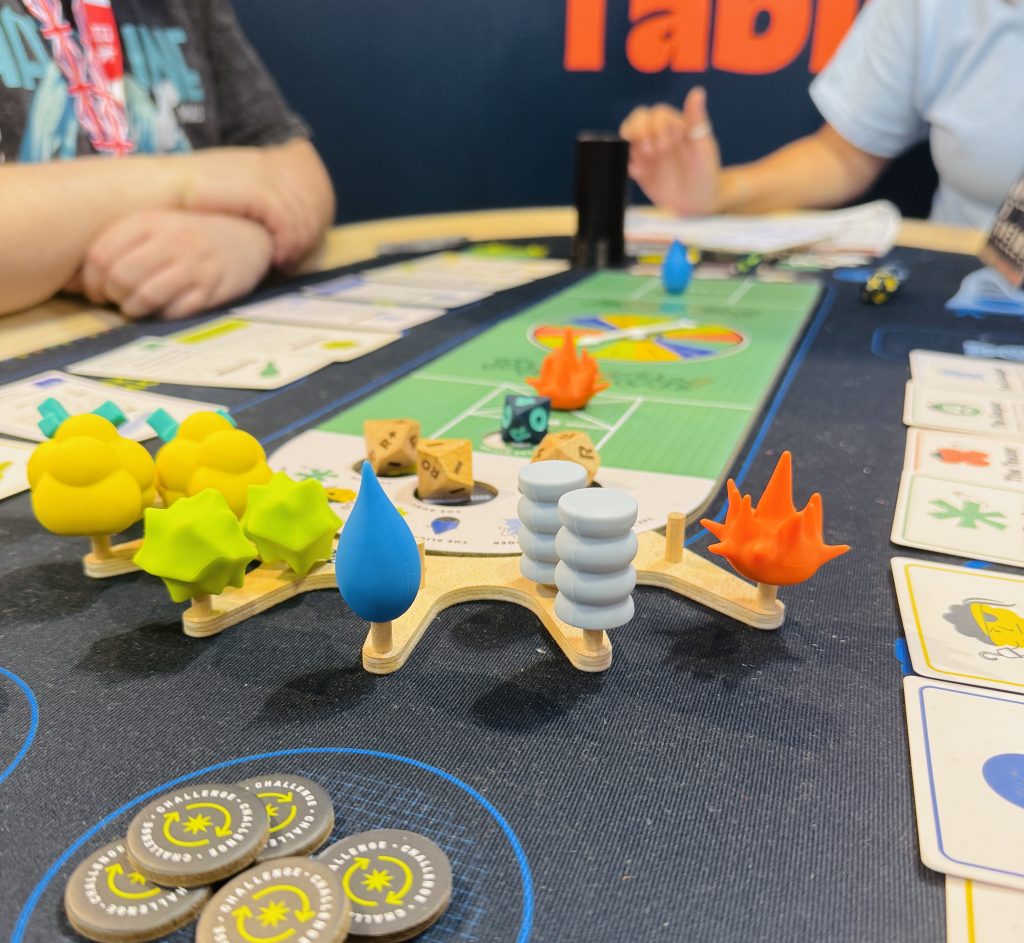
Originally, we were going to do a real-life version of the game that is more inclusive on the field. But eventually, after speaking with the family, we realised that it would be better to reinvent it as a tabletop game. You see, this is a game with risk and strategy, and you don’t necessarily need a field, or rings or a ball. We could create the same conditions on a table.
When we started thinking about it together as a family, we all got quite excited.
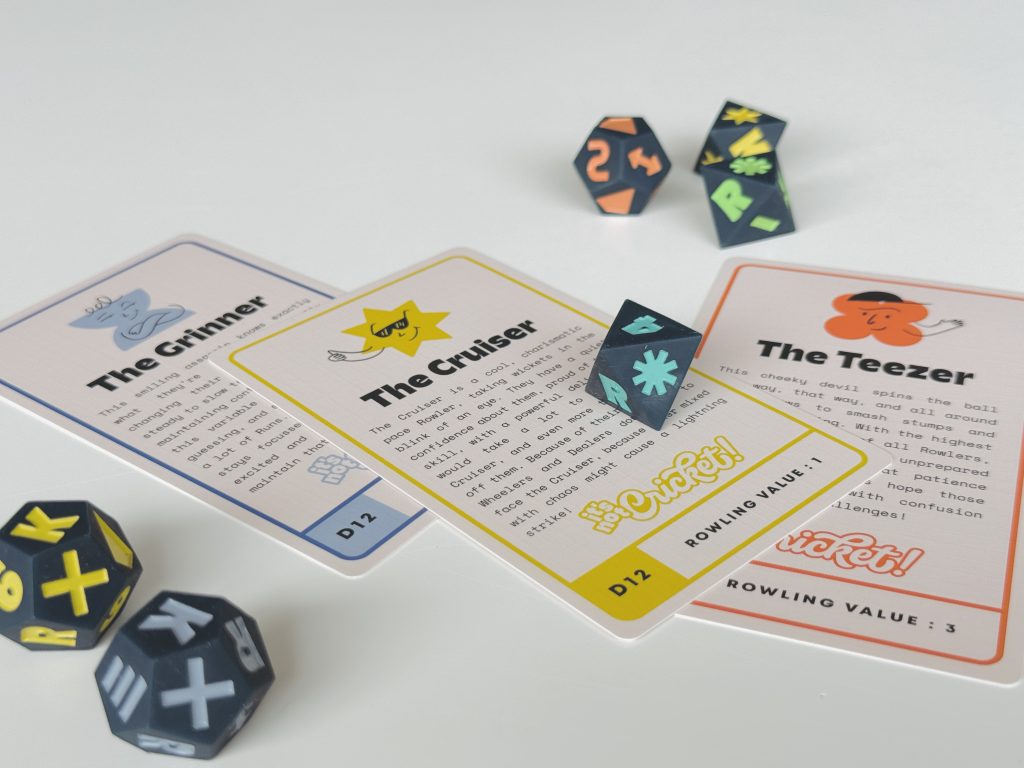
The next step was figuring out how we could introduce cricket to a community that had a preconceived vision of the game. We tried to create a brand identity — imagery, characters — that would engage new people. But as we got deeper into it, and tried to be as inclusive and equitable as possible, we realised we had to consider neurodiversity in this game and in board games generally.
M: This drove a lot of your design choices, right?
P: Yes, one perfect example is the use of silicon dice. We wanted to avoid the jarring noise of typical resin dice. We wanted to think of alternative materials that could make everyone comfortable.
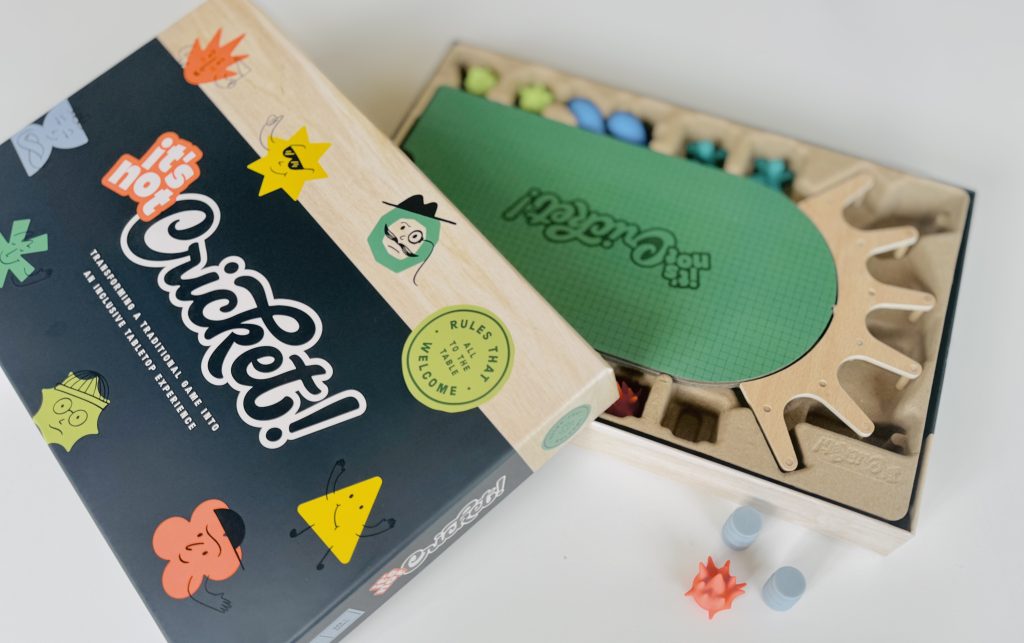
M: When I was reading about It’s Not Cricket, I was very struck by your mission statement but also by how you followed it through. I think a lot of companies will say ‘oh, we’re working on inclusivity and accessibility’, but then there’s no follow-through, you know. It’s something they just put on the label. But with your game, from the game mechanics to the design of the components, the materials you chose, to the way you’ve made the box so all the pieces fit perfectly, I could see there was a lot of dedication to make the game truly inclusive, which is remarkable.
2. Collaborating & Growing
M: I also noticed on your website that you have this submission form inviting feedback and suggestions, which I think encapsulates who you are as a company, and how learning and listening are core to your creative process.
I wanted to ask if you could talk a bit more about the design process, and especially the role collaboration has played?
P: Early on in the design stage, it was more of an internal discussion. I have my own design firm, architecture, interior design, and graphic design, and brought a lot of that knowledge to board games, which was completely new territory. However, I found there were a lot of transferable skills. I think we had a pretty good start even before we could reach out to people and show them what we had.
But when we started getting feedback, including from the UK Games Expo (UKGE), we got all these new, different points of view. We’ve taken on a lot of the feedback. And even if we don’t apply it to It’s Not Cricket, we will be applying it to our next projects!
Z: Since the expo, people have come to us genuinely eager to chat with us about their experiences, like ‘ooh! What about this!’ or ‘oh, could you help with that?’ And I think that it is exciting that we can work to make everyone feel included, in the game itself but in the creative process as well, and make them all feel like there really is something here for them.
Yeah, we are in a really key, developmental stage as a company, and getting as much feedback as we can is very exciting.
P: Very exciting. There has been a lot of curiosity from people who come from completely different backgrounds from us.
When we were at UKGE, we met a teacher. She had an idea for a new way to teach children, but felt she had no skill or ability to realise it. So, she said she wanted to collaborate with us, because she thought we had the understanding and ability to transform a conventional way of thinking into something new, more impactful.
We’ve had several instances like that, where people have wanted to take our game, our tools and strategies, and apply them to their ideas or interests which they would like to make more approachable to other people. Somebody talked about snooker. They said to us, ‘Can you help us re-imagine this game into something else? Take the essence of the game and make it more accessible?’
This has happened to use several times, with many different things, not just sport. Like Lifelites.
Z: Yes, we are actually starting an amazing journey with Lifelites (charity which provides inclusive assistive technology for children). They were interested in how we could collaborate, and I was interested in how we could make our games accessible to people with physical disabilities. Obviously, right now it requires physical dexterity to play. So, we want to have a conversation with people who are going to help us develop a game in a more accessible way. That’s the feedback we would love to have in the development of games, going forward.
P: The feedback is important, whether it is us developing new games, or if we help someone else develop their own project. Our mission statement is genuine, something we truly believe in wholeheartedly. But, of course, there is a commercial reality to this.
3. Challenges in the Industry
M: Yes, I wanted to ask whether you saw someone else in the game industry who was doing what you guys are doing, someone who has a similar mission and execution?
P: I would say we haven’t, really… Some people are trying to identify with being accessible. But I can’t think of anyone that is going as far as we are.
Z: There is such a spectrum of things that people need and want from a game. But I think that what separates us, and what does impact the cost, is the physical board game. Some people use wood, but again, it’s not for the same sensory reasons as we use other, more unusual materials.
There is a gap in the industry, because people are trying to make just the price accessible.
P: That’s something we’ve learnt about the cost of manufacturing. There is an impact, the more you do something differently. There is a reason people stick to the same materials and formulas; there is a premium to pay when you go against the grain. Regular manufacturers will steer away from that because of the fear of it not selling or turning a profit.
We have the luxury of having a bit more liberty. It’s Not Cricket is self-funded currently; it is funded by the family and my other company. We are aware that that has a limit, but I’m hoping we’ve crossed the line where we have established ourselves well enough that people will seek us out for guidance, maybe consulting for other game designers. Whatever the source of income may be, we want to reach the point where we don’t have to rely on private financing or cheap manufacturing. How long will that take? We don’t know that yet. But after these last few months, following the launch of the game, it’s very likely to be a success.
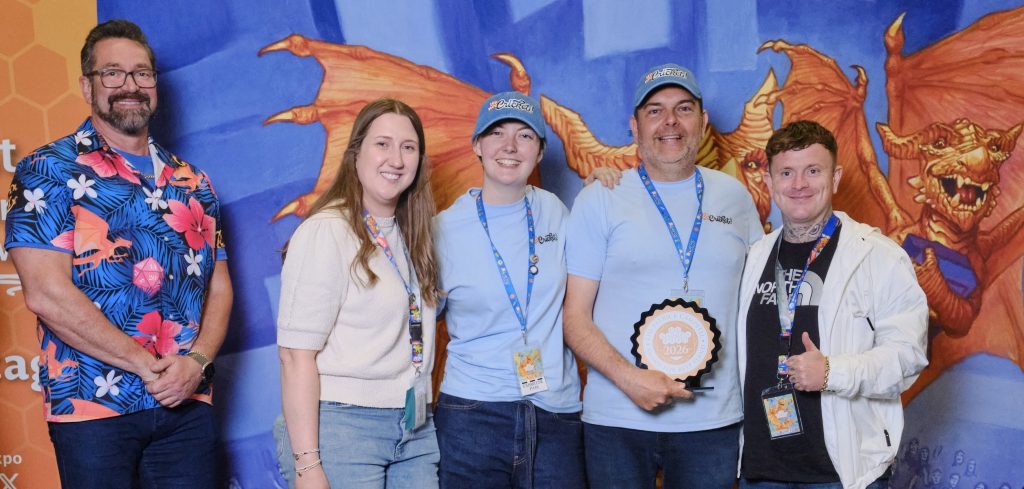
We were very pleased to have secured a spot at the the Expo, and the positivity that came from all the visitors to our stand was wonderful. We realised that we really had something special here. We’d picked through a problem and presented it in a way that resonated with people, cricket players and non-players, people with disabilities, neurodiverse people, and they all got something out of it. We saw that our message was clearly resonating with people. And people are noticing, and I think we can build on that. In a way, we are the front-runners of this type of design. So for us, having spent several years trying to get to that point, it was quite rewarding.
The best thing for us now is to keep that momentum going and to share it. Other game designers can maybe see that, yeah, you can do things a little differently. Yes, it might cost a bit more, but the game has benefited us, and we genuinely feel it can benefit others.
4. The 4 Gameplay Variants
M: Did I read somewhere that you are working with special needs schools?
Z: It’s in its early stages, but we’re hoping that in the next school year, starting September, we’ll be able to go into schools, introducing the game at different levels.
We’ve got conversations going with a school with older students, 16-year-olds, as well as with primary schools. And because we’ll be hosting the game at different levels at each school, It’s Not Cricket won’t be the same game each time. That’s what’s so amazing about it: the various ways you can play it.
M: Would you like to speak more about the different variants of the game?
Z: Yes! We have 4 primary formats.
We’ve got Quick inc, which is literally a ten-minute game where you are literally just rolling dice as quickly as you can to get more points than the other team. Some things don’t happen in the game; we just wanted to make it really accessible. It’s a good junior- level game.
P: Everyone is looking for something different when they play a game, and actually It’s Not Cricket can provide that range. At the Expo, this format was really good for the young people.
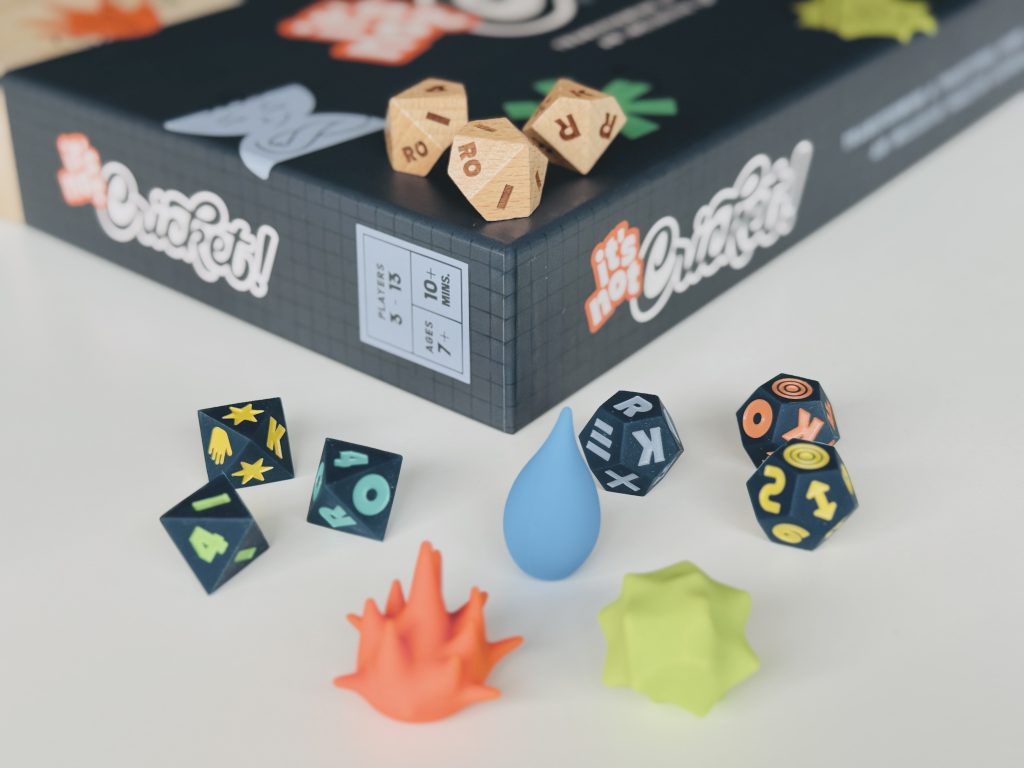
Z: The next level up is the Bang Bang Crumble format, which is 15 minutes a side, so about 30-40 total. You get a bit of strategy, but still on a timer, so it’s still got that adrenaline build-up.
Then, our standard format, which is how we recommend playing if you want to get into the game, is called Rowly Poly. That’s about 40 minutes a side. There’s no timer, now you’re just playing, keeping track of score. The other benefit of this format is that you can take your time with it, go away and come back, because it is easy to track where you are in the game.
M: Oh, that’s an excellent feature.
Z: It’s really nice, say, if you are going for dinner or just need a break.
M: The game goes at the player’s pace. That’s very valuable.
Z: Yes, and that is then exaggerated in our last 5+ hour format, Holy Moly.
P: Yes, that format extends the game. It has a few more added rules which add complexity and depth to the game. But the benefit of this, as a score-based game, is that you can leave and come back to it. We’ve met people who do game night, and you can start it one Tuesday and come back to it next Tuesday, because you’re not going to lose your place or knock pieces off the table. You can pack it all away, and as long as you’ve got your score sheet, you can pick back up right where you left off. So, I think that appeals to a different sector of board game players.
5. An Odd Player Count
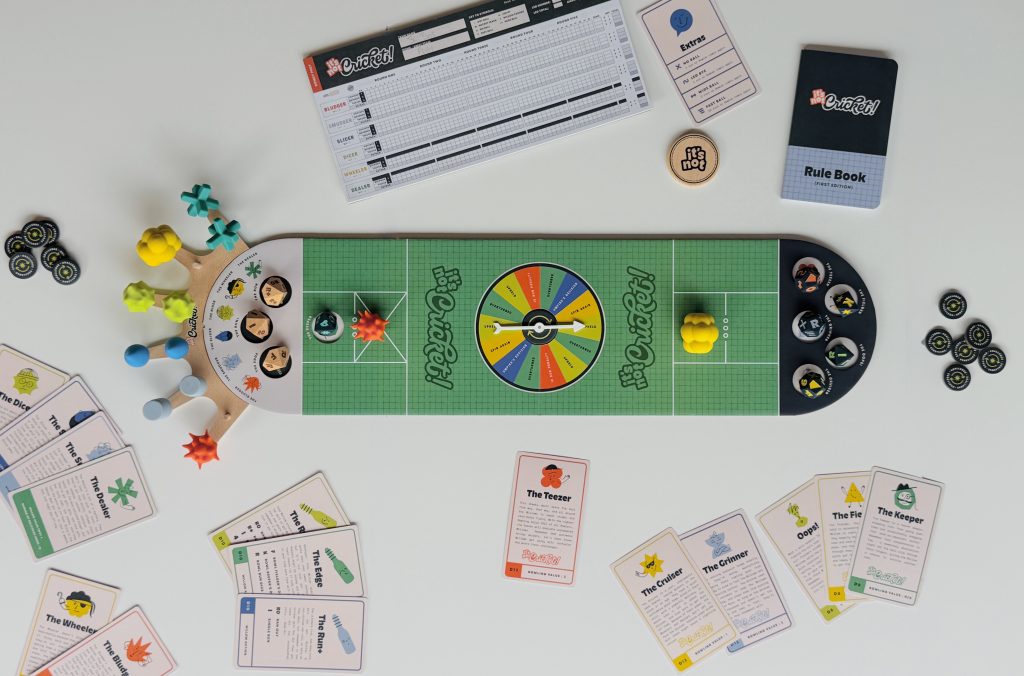
P: We say on the box that it plays between 3 and 13 players, which really did prickle a lot of interest. Why three? What’s that about? And that odd number is due to the Umpire, which, really, I think is the star of the show.
Z: Very controversial
P: It’s an unusual role to have. It’s this impartial party who doesn’t play on either side. They are there to keep the score and adjudicate on outcomes and challenges. What we’ve found is that there are often people in a group who like the idea of being there, part of the team, but aren’t really that excited to learn the rules and play the game. So that role actually filled that gap. I didn’t expect how successful that was going to be, but it is a role that fixes a problem you often have with family games.
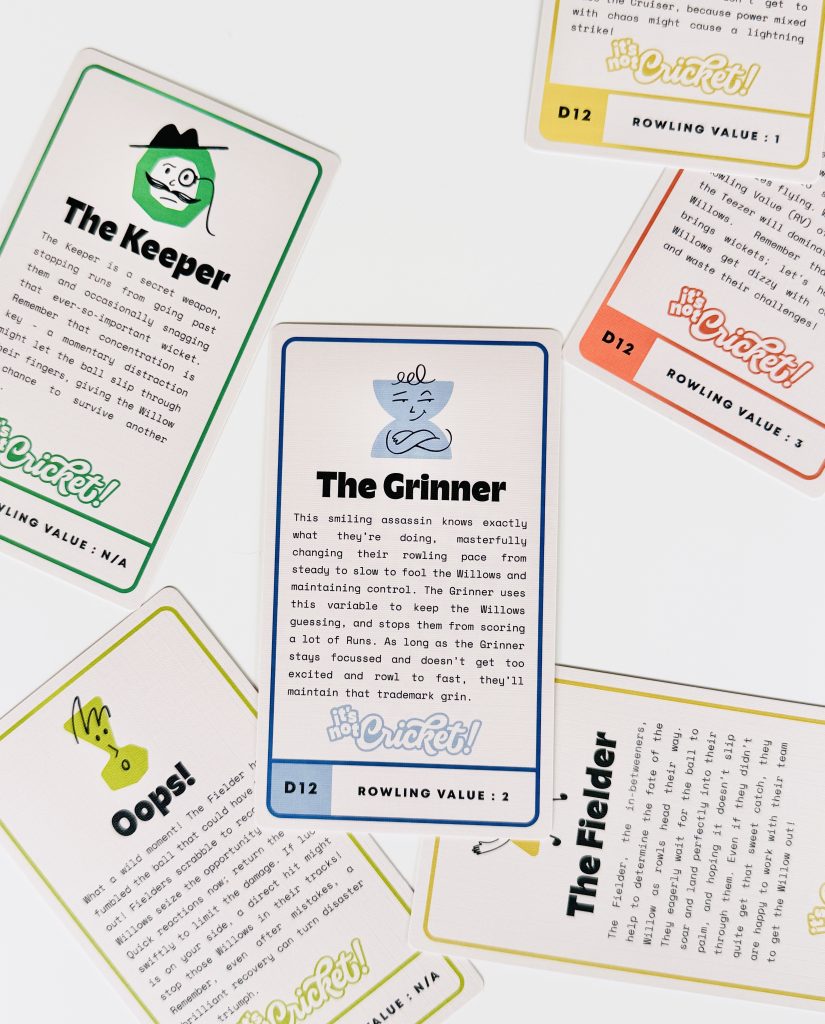
Z: And then with the thirteen players, the teams are designed so you have up to six on each side. You take turns playing either the ‘Rowlers’ or the ‘Willows’’ side. Each team has a different set of characters or roles you can play as. We are quite proud of the character designs, they are all wonderfully wobbly, imperfect, full of personality. We wanted them to feel unique and fundamentally human! When you start the game, you nominate yourself as a character. Over the game, you get to connect with that character, and it makes you feel that much more involved and dedicated as you navigate being in a team and facing challenges. You see a lot of conversations sprout; it’s a good, fun dynamic.
6. Board Game Inspirations
M: Can I ask you guys, just for fun, what are your board game inspirations, or what are your favourite games to play as a family?
Z: It’s so funny, we are actually quite stuck on classic games, really. And it’s because, as a family, we all have different neurodiversities (laughs). Half of us have ADHD and the other half are autistic, so it’s hard trying to find something that keeps all of our attention. Oh, but there’s this game with a hamburger we like a lot. Burger Balance?
P: It’s really nicely made. It’s got wooden pieces, and you have to stack a hamburger and get all the pieces in the right order, and keep it from toppling over.
Z: Yeah, when we started working on It’s Not Cricket, I wanted a bit of that. The tactility of the pieces is part of why we like the burger stacking game so much. That comforting feeling it has was something we wanted to introduce to our game.
7. What’s Next?
M: To finish off, what’s next for It’s Not Games?
Z: We are really excited to be working on a few new games that carry the same ethos of subverting expectations, sparking genuine connections and finding fun, humour, learning and creativity in our next creations. We are looking to develop games that continue to work closely with accessibility, welcoming all to the table, with one that tries to encourage younger kids to feel as involved as adults, and another where multiculturalism is celebrated.
Forthcoming titles include ‘It’s Not Not Nonsense’, ‘It’s Not Schnitzel’, and ‘It’s Not A Pirate’s Life For Me’!
We are really looking forward to sharing our spirit and enthusiasm with a variety of communities, hosting tournaments and partaking in events that allow us to reach new people and engage with them meaningfully.
Thank you again to Zoe and Paul Jozsa from It’s Not Games for meeting up with me and sharing their wonderful game with all of us, here at Chance and Counters.
If you’ve ever wanted to create your own board game but don’t know where to start, or if you’re curious and want to know more about the industry and support local creators, you won’t want to miss this event!
Find It’s Not Games:
Find more information online about all events available at our Chance & Counters board game cafés in Leeds, Bristol, Cardiff and Birmingham.