
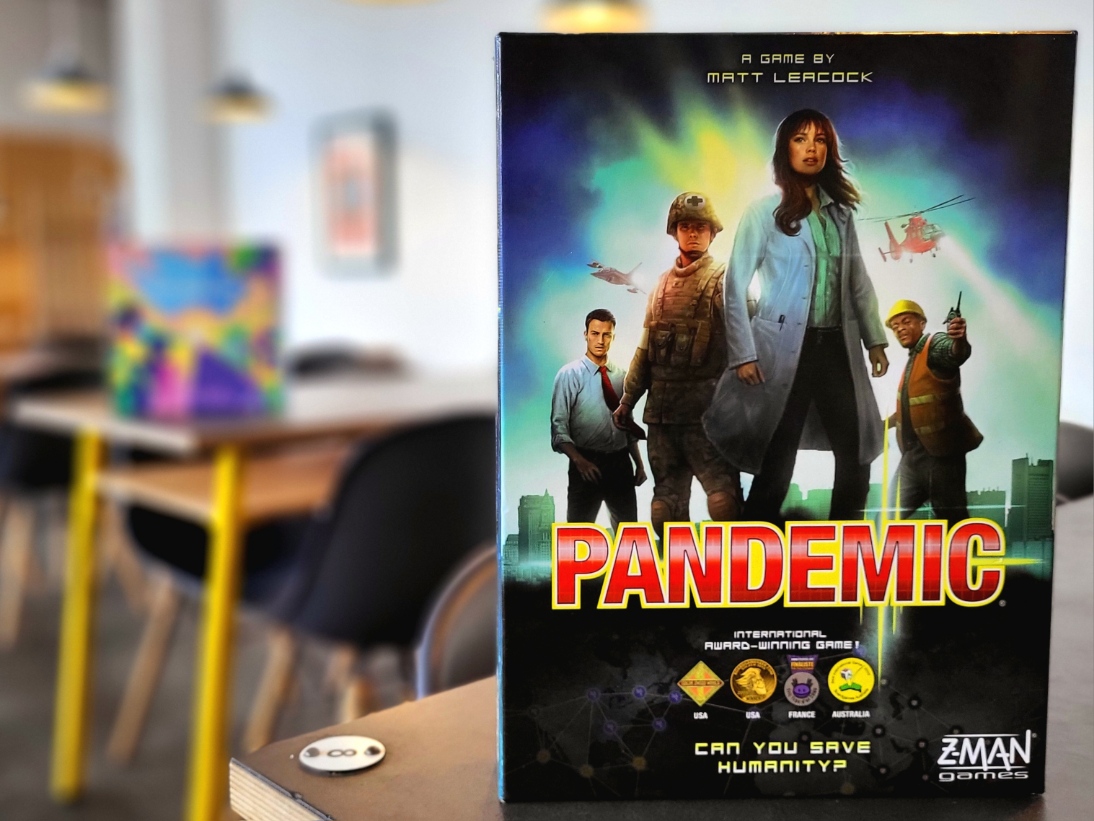
Pandemic was a game changer in the board game scene. In 2008 when it was released, there was no cooperative game quite like it and to this day it stands as a bastion of great game design. Matt Leacock is the designer and he has gone on to use this ‘system’ in various other games too, but let’s not get ahead of ourselves, what makes Pandemic so great and what is it about?
First of all what inspired him to design this game? Turns out that his competitive evening games with his partner were becoming a bit strained so he turned his hand to creating an alternative. I guess necessity is the mother of invention after all!
He took inspiration from the 2002-2004 SARS outbreak and scaled it to a global level. For those of you who don’t know the game, you are a group of specialists working together to deal with a number of diseases that have all become a threat to different parts of the world, the idea is to get them cured before any of them gets out of hand. With multiple ways to lose and only one way to win and ways to make the game harder too, this is a challenge however you choose to play. Win or lose, together. Test your tactics, logic and logistics to overcome the threat and save the world!
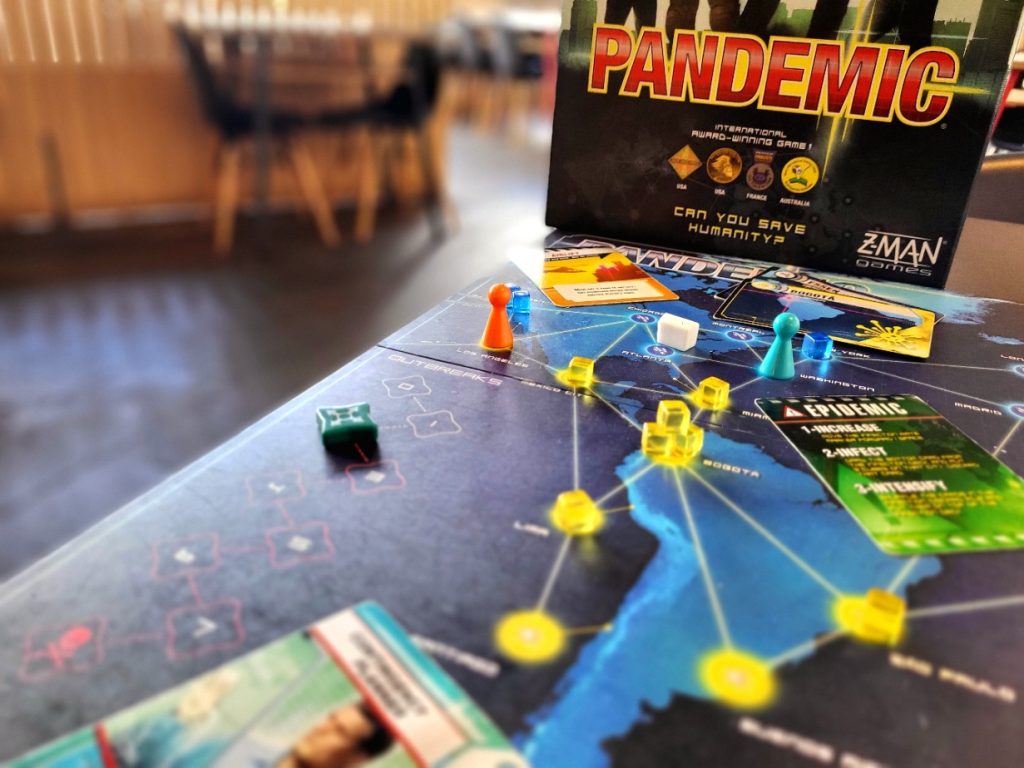
Many clevererer (?) people than us have assessed what makes this game work so well. We’re not geniuses but we think of it like this… any competitive game has you pitted against one or more people, whether you are directly attacking or interacting with them or just trying to be more efficient at something to them, there is something to work against. Remove the competition and what are you pitted against? Pandemic uses an interlinked combination of locations on a map and two decks of cards to create a system that ‘fights back’. As you start to solve the puzzle and get into a stronger position, the game also gains momentum by making the game fight back harder, it’s all very smart!
I could go on about Pandemic for a whole blog, but this is supposed to be about another game so before I move on to that, I’m just going to mention a few other games that Matt Leacock has gone on to do using parts of this versatile gaming system.
There is the Forbidden Series of games (previously mentioned in this blog about cooperative games). In our opinion they are the best way to start your journey into this game style, they simplify to start with and add rules and complications with each game and are great for all levels of gamer.
He’s also done a series of other Pandemic games, arguably one of the best is Pandemic Iberia which takes a specific time in Spanish history where railways were spreading out making movement easier and the purification of water supplies helped fight back against the spread of various diseases. Other games include one set in the World of Warcraft, a Cthulhu based one, a Star Wars twist and the absolutely amazing, ever changing, Legacy trilogy…
So, enough about Pandemic, what game could possibly challenge this behemoth?
The new cooperative contender… Daybreak!
Let’s mention the elephant in the room. Pandemic had a surge of popularity during the actual pandemic. A game that came out before we really knew what living through a global pandemic would be like… about controlling a pandemic? Science warned us that a pandemic was a possibility and it happened. It has also been warning us that our world will change forever and has begun to do so already. Yes, we’re talking about climate change. Enter Daybreak.
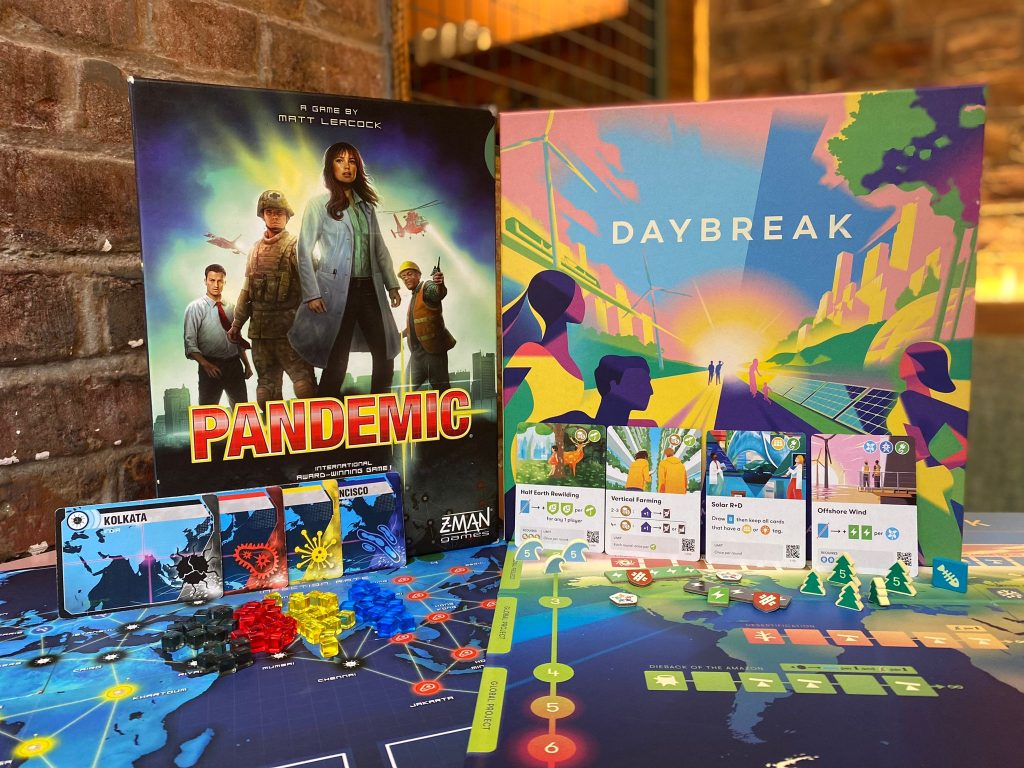
Players are global powers and start the game with high emissions of carbon and differing powers and energy demands. As the game progresses, the emissions lead the temperature to rise and as the temperature rises unknown tipping points and crises take place pushing the world toward the brink of global change.
Using human technology and working together the players must fight against this and hopefully reach the point of ‘draw-down’ where emissions have basically become negative. If, before this happens, the temperature rises over two degrees centigrade then the game ends in failure. If a player has too many communities in crisis then the global economy breaks down and the game ends in failure. If you haven’t won by the end of the 6th round, the game also ends in failure. Gosh, you’ve got your work cut out!
This is a challenge and the game itself is more complex than Pandemic but it is so worth playing. The designers? Well Matteo Menapace joined forces with, you guessed it, Matt Leacock, the creator of Pandemic. This game only went and won the prestigious Spiel des Jahres Kennerspiel award in 2024, that’s the expert game of the year and is the first time that any game by Matt Leacock has won. After all his great games, that’s got to tell you something!
This game is stunning, the artwork is hopeful and full of life. Every card even has a QR code on it to take you to a webpage that assists with rules but also talks about what a card represents and in the case of Local Project cards will tell you how to go about making change in the actual world. The game itself contains no plastics or harmful textiles, as you would expect about a game about environmental impacts, they have gone to every length they can to minimise its own effect on the planet.
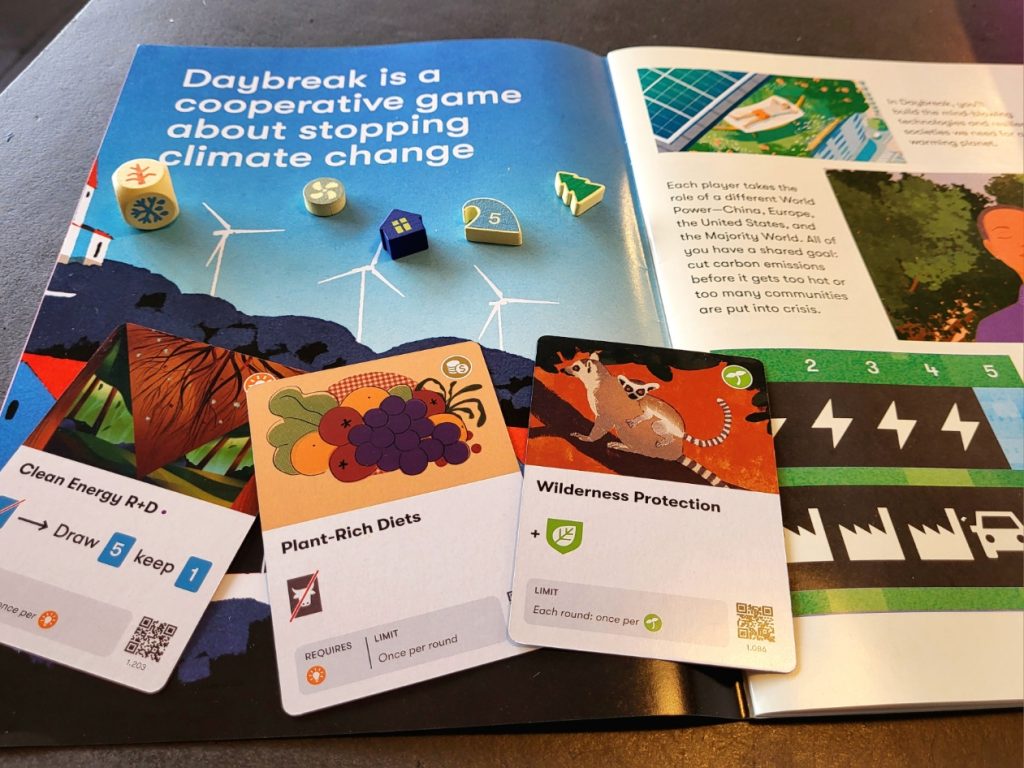
Yes, this game is trying to tell you something, but it’s also a great game. Learning through play is important for adults as well as for kids. It’s really quite hard not to seem like we’re preaching when discussing a game like this but it IS a very well made game and deserves to be played, this is why it’s in all our cafes. Just a mention to the awesome rule book here… it is extremely well designed and is the only one we’re aware of which has 10 pages before the set up begins giving you a nice simple ‘what this is all about’, that seems like a lot of pages but it’s a big font and lots of pretty pictures… Book yourself a slot at one of our locations, give it a go and let us know how you get on with it.
___
One last thing… In the first game I played, China leapt forward in electric vehicle technology and found a way to pass on that technology to the United States of America thus helping them control their excessive transport emissions. At the same time they also dealt with the threat of fossil fuel disinformation by using societal pressure. At that moment I sat back and thought about what I’d done.
Games, they make you think!