
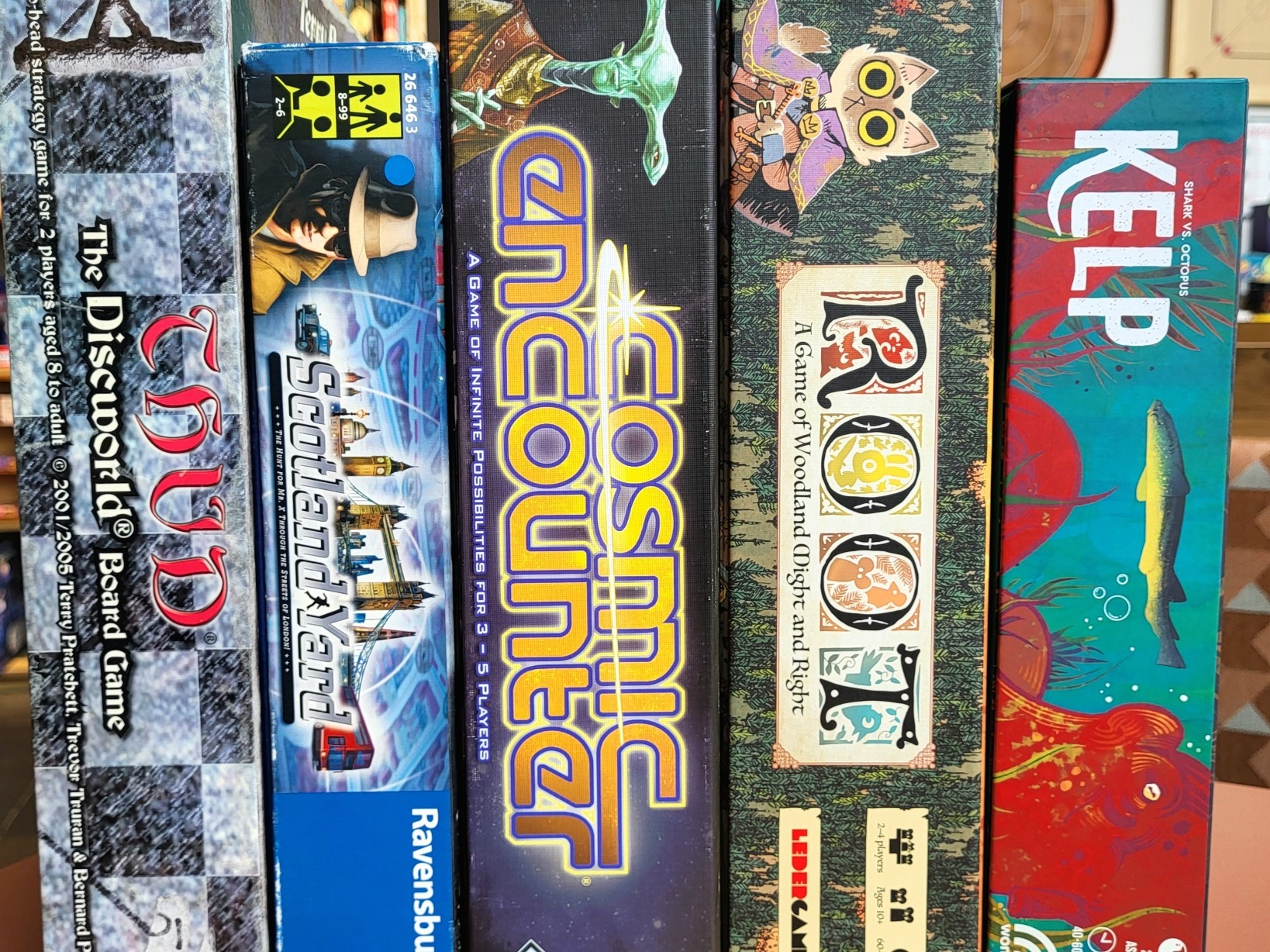
A lot of board games start with all players having exactly the same (or similar) set-up and they all obey the same rules. Think of Chess, Guess Who, Battleship, Catan, Jenga all games of symmetrical game play.
This is not true of all games. We’re going to take a brief look at asymmetry in games and highlight a few modern takes on this style as well as show off a particularly awesome newcomer to the genre.
A historical entry… Hnefatafl
Sorry, we don’t have a copy of Hnefatafl in our cafes so, no photo, although there are plenty online… Also, don’t ask us how you pronounce it either, not a clue! We do have a modernised variant though, based on a board game from Terry Pratchett’s Discworld, Thud! so have a picture of that!
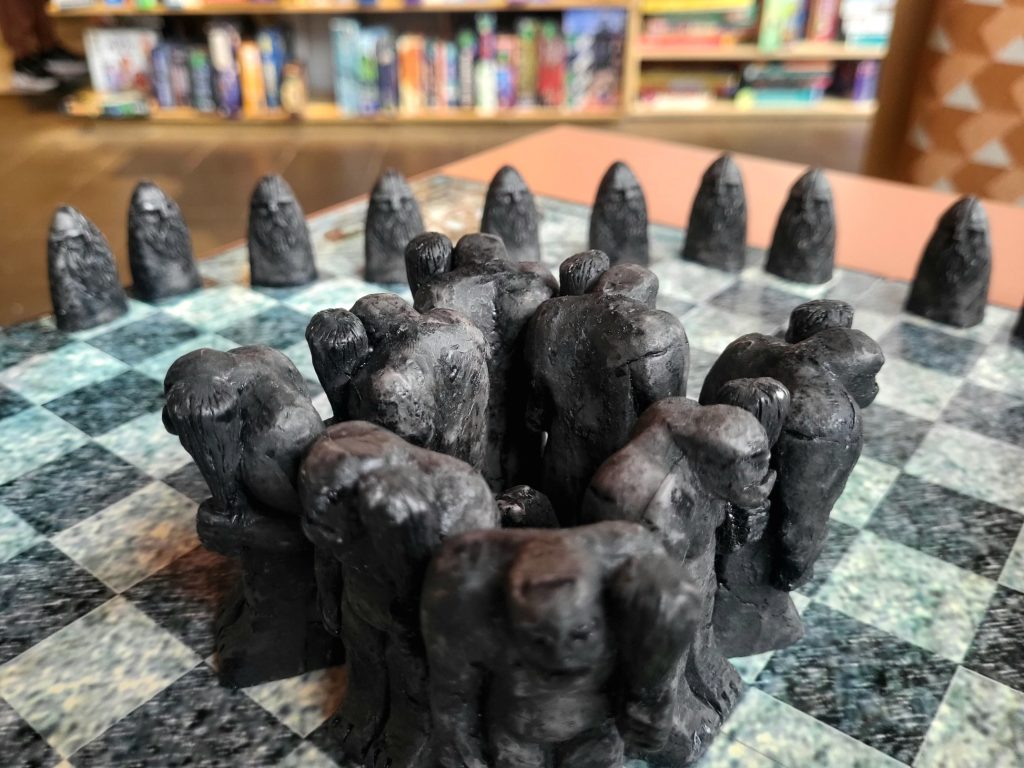
As close as people can tell in the form we know today Hnefatafl’s been around since 400AD and was played by the Vikings, Irish, Saxons and Welsh. It probably developed from an earlier game played by the Romans, Ancient Greeks and Egyptians but those earlier games aren’t fully understood due to lack of consistent written rules.
In Hnefatafl one player starts with a King and pieces in the middle of the board and needs to get their King to any corner, the other has twice as many pieces and they are set-up around the middle of each edge of the board. The rules for each player are the same, it’s just the set-up and win conditions that vary but clearly this is an example of an early asymmetric game as is the classic Fox and Geese.
An example of another style… Scotland Yard
Here’s a game from the early 1980’s (some may still consider this ancient!) and is a great example of the One-vs-Many style of game.

A One-vs-Many game is exactly what it sounds like, the majority of players are the many and a single other player is against them. In Scotland Yard the one is Mr. X who has clearly done something unspeakable (as it’s not mentioned in most versions of the rules) which has got the whole of Scotland Yard looking for them. The other players are the Police looking to capture this dastardly individual. Yep, it’s basically a manhunt using hidden movement, Mr. X keeps track of their location on a hidden sheet of paper whilst the police run around trying to figure out where they might be.
Other awesome games in this genre would be Whitehall Mystery, Fury of Dracula and Spectre Ops.
Purely powers… Cosmic Encounter
Another style of this kind of game would be asymmetric player powers and Cosmic Encounter is a great example of this, the current iteration of this is from 2008 but the earliest one is from the late 70’s.
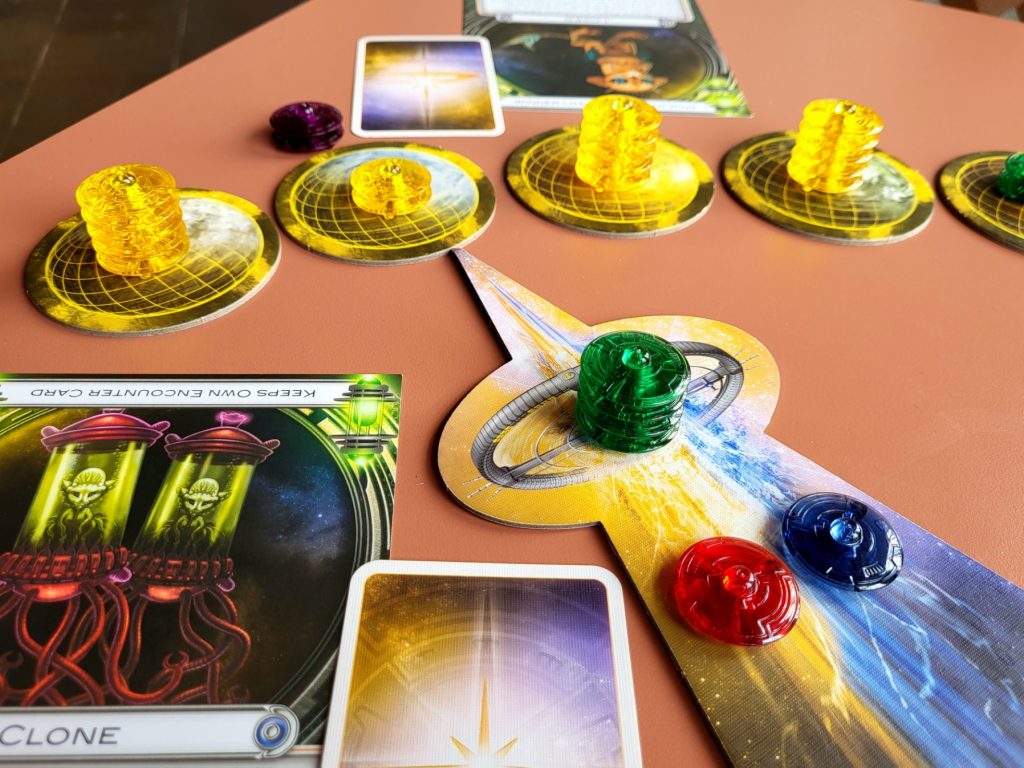
The asymmetry in this game stems from every player representing a different alien race and so everyone has a wildly different special rule. This leads every game to be totally different as there are so many races. A lot of modern games rely on this idea to create a great deal of variability in their games, from the many corporations of Terraforming Mars, or the God cards of Santorini, race and trait tiles of Smallworld, characters of Pandemic, the list is endless (last count on BGG over 17000 games have variable player powers!). Of them all Cosmic Encouter is definitely one of the more extreme and has a special place in many peoples hearts.
A modern publisher based on asymmetry… Leder Games.
One stand out publisher has embraced asymmetry to its very core and nearly every game they have produced has some form of asymmetry, their flagship game being ROOT.
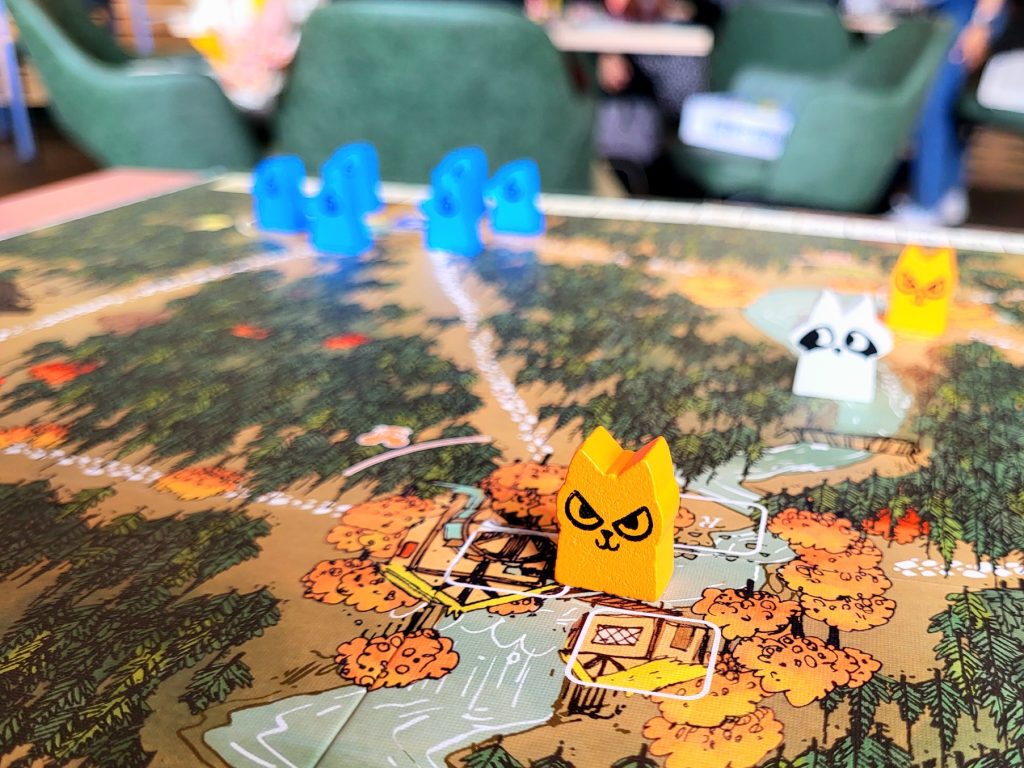
Cute woodland creatures? Nope. This is a fight for dominance and each race (now in double figures if you get all the expansions) plays differently to each other in quite creative and wildly different ways. From the military might of the Marquise de Cats to the Relic Hunting Badgers, this is an amazing game that deserves to be played multiple times to get the most out of this modern masterpiece.
The recent stand-out… Kelp
Or to give it its full name… Kelp: Shark vs. Octopus
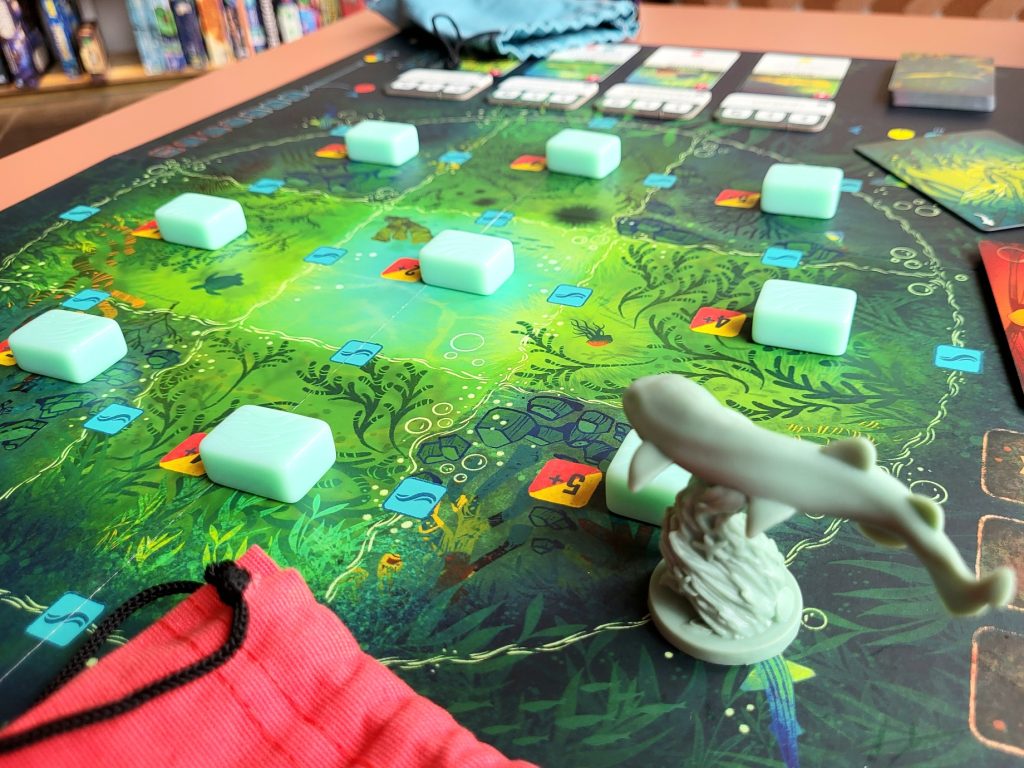
Set in a South African kelp forest and based on the behaviours of these two creatures Kelp is a deeply asymmetric experience, so much so that each player is playing a different style of game.
The Common Octopus is hidden on the board amongst the tiles and will move, hide and bluff their way through the game whilst building a more powerful deck of action cards. Their aim? To either feast on all four types of food available or wait out the Shark until it becomes exhausted, only then will they have won the fight for survival (and the game).
The Pyjama Shark is tactically mitigating dice rolls to hunt down the Octopus using the sea currents to move quickly, confront the Octopus and land a successful strike whilst applying a bit of memory and deduction. One successful strike and it’s game over with a win.
This is a beautiful game that needs a bit of time to learn (as all great asymmetric games do) but is well worth your time. We’ve hardly touched on the well balanced and deeply asymmetric game play but it has to be tried to be believed.
Why not pop by one of our cafes and ask us for one of our favourites? We’re sure to show you something amazing.